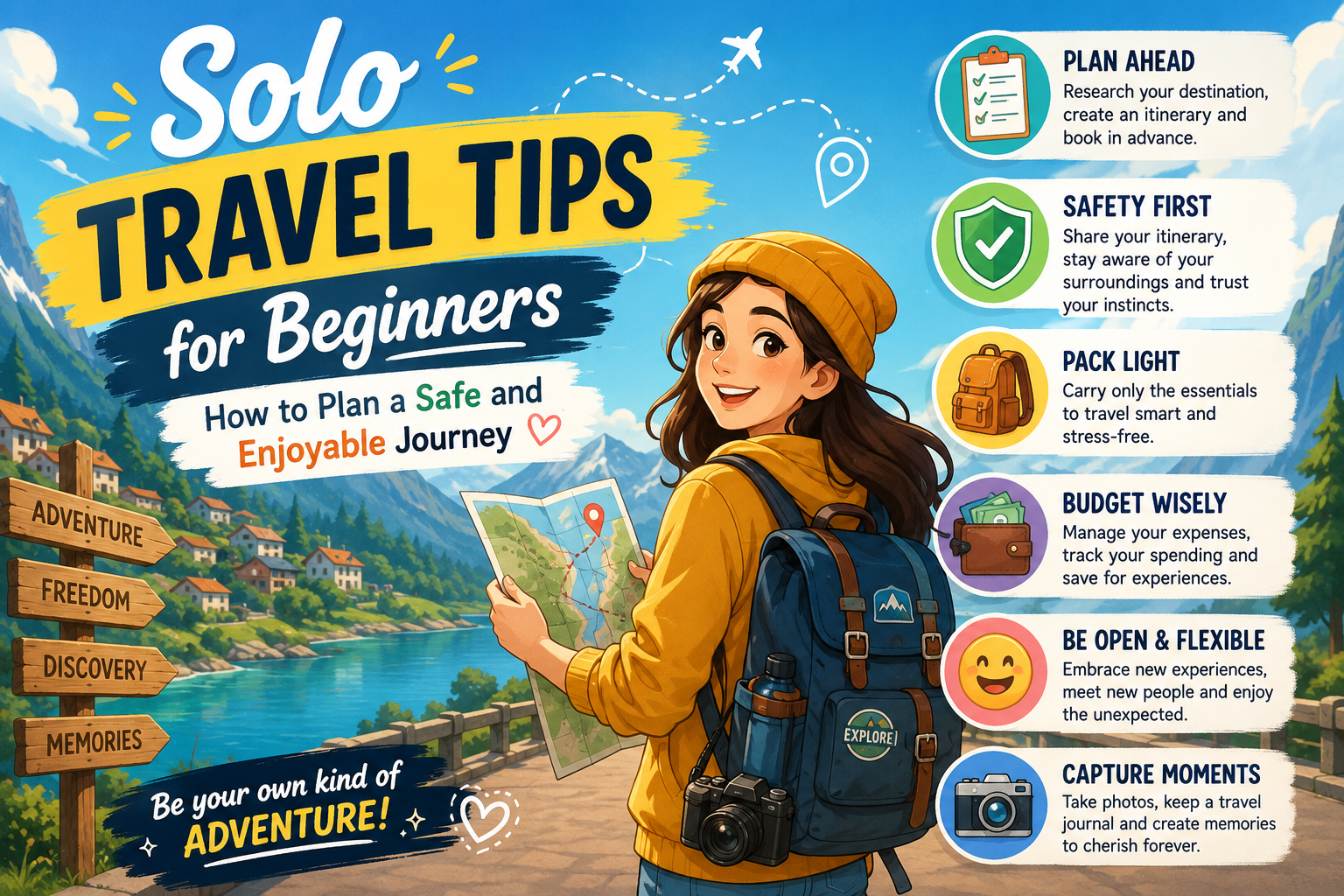
Travelling alone can be exciting, peaceful, and deeply rewarding when the journey is planned with practical safety, realistic budgeting, and enough flexibility for unexpected changes.
Solo travel gives people the freedom to choose their own schedule, visit places that genuinely interest them, and make decisions without waiting for a group. It can also build confidence, independence, and problem-solving skills. However, first-time solo travellers may worry about personal safety, loneliness, transport, accommodation, or managing expenses alone.
The best way to reduce these concerns is to prepare carefully without planning every minute. Research the destination, organise essential documents, book the most important parts of the trip, and create a simple backup plan. Good preparation does not remove the sense of adventure. It creates a stronger foundation for enjoying it.
The following tips can help beginners plan a safer, more comfortable, and more enjoyable solo journey.
Choose a Beginner-Friendly Destination
Your first solo trip does not need to be far away or complicated. A destination with reliable public transport, clear tourist information, safe central areas, and accommodation in several price ranges can make the experience easier.
Consider language, weather, travel time, local laws, healthcare access, and the total cost of the trip. A beautiful destination may not be the best beginner choice if transport is difficult or communication is extremely limited.
A short domestic journey can be valuable practice. It allows you to learn how you react to unfamiliar surroundings, manage bookings, organise luggage, and spend time alone before attempting a longer international trip.
Research the Destination Carefully
Learn about the areas you plan to visit before arrival. Check how travellers normally travel from the airport or station, which neighbourhoods are suitable for visitors, and whether public transport continues late at night.
Read information from official tourism resources, transport providers, accommodation platforms, and recent traveller experiences. Pay attention to recurring complaints rather than judging a destination from one negative review.
- Local emergency numbers and nearby medical facilities
- Common scams and areas requiring extra caution
- Local clothing expectations and cultural etiquette
- Transport payment methods and operating hours
- Seasonal weather, closures, or public holidays
Create a Realistic Travel Budget
A clear budget helps prevent stress and reduces the temptation to choose unsafe transport or poor accommodation simply because money is running low.
Estimate the cost of transport, accommodation, meals, attractions, travel insurance, mobile data, local travel, and emergency expenses. Add a small buffer because prices and plans can change.
| Budget Area | Money-Saving Approach | Safety Reminder |
|---|---|---|
| Accommodation | Compare total price and location | Do not choose only by lowest price |
| Food | Mix local meals with simple groceries | Use clean and busy food outlets |
| Transport | Use official passes and public routes | Avoid unverified private rides |
| Emergency fund | Keep it separate from daily spending | Maintain access to a backup payment method |
Book Safe and Convenient Accommodation
Location matters as much as price. Accommodation close to public transport, restaurants, or central attractions may save time and reduce the need to walk through quiet areas late at night.
Read recent guest reviews, especially comments from solo travellers. Look for reliable reception, secure room access, clean surroundings, luggage storage, and clear arrival instructions.
If your arrival is late, inform the property and confirm the check-in process. Save the address offline and take a screenshot of the booking details. Avoid publicly posting your exact room number or daily schedule.
Pack Light but Prepare for Essentials
Heavy luggage makes solo travel more tiring and can make it harder to watch your belongings. Choose clothing that can be combined easily and suits the local climate and cultural expectations.
Identification, tickets, insurance details, bookings, and required visas.
Regular medicine, basic first aid, sunscreen, and personal hygiene products.
Phone, charger, power bank, suitable adapter, and offline maps.
Keep valuables in your hand luggage. Divide money and payment cards between secure locations so one lost wallet does not remove every option.
Stay Alert Without Becoming Fearful
Solo travel requires awareness, but constant fear can prevent you from enjoying the destination. Pay attention to your surroundings, keep bags closed, and avoid displaying large amounts of cash.
Be cautious when strangers ask personal questions about where you are staying, whether you are alone, or where you will be later. You can remain polite without providing accurate private details.
Trust your instincts. Leave a taxi, shop, street, or social situation when something feels wrong. You do not need to stay simply to avoid appearing rude.
Avoid Common Solo Travel Mistakes
- Creating an exhausting schedule with no rest time
- Arriving late without arranging transport or check-in
- Keeping all money, documents, and cards together
- Posting real-time location details publicly
- Ignoring local customs or safety advice
- Depending completely on internet access
- Drinking excessively or accepting unattended food and drinks
Make the Journey Enjoyable
Safety planning is important, but solo travel should also feel enjoyable. Leave open time for a café, local market, peaceful walk, museum, or unexpected recommendation.
Joining a walking tour, cooking class, day excursion, or hostel activity can provide social interaction without removing your independence. You may meet people naturally while keeping control over your schedule.
Eating alone may feel uncomfortable initially. Choose casual restaurants, sit near a window or counter, carry a book, or plan meals during quieter hours. Confidence often grows after the first few experiences.
Record memories through photographs or a travel journal, but do not experience the entire trip through a screen. Take time to observe the destination and appreciate your independence.
Frequently Asked Questions
1. Is solo travel safe for beginners?
It can be safe when travellers choose a suitable destination, research local risks, stay connected, and use reliable accommodation and transport.
2. How long should a first solo trip be?
A short trip of several days can provide useful experience without creating the pressure of a long and complicated journey.
3. How can solo travellers avoid loneliness?
Group tours, classes, shared accommodation spaces, and regular contact with family can provide social interaction while preserving independence.
4. What should a solo traveller do in an emergency?
Move to a safe public place, contact local emergency services, inform a trusted person, and contact the relevant embassy or insurer when necessary.
5. Should beginners book everything in advance?
Book essential transport and the first accommodation, but leave reasonable flexibility for weather, energy levels, and new opportunities.