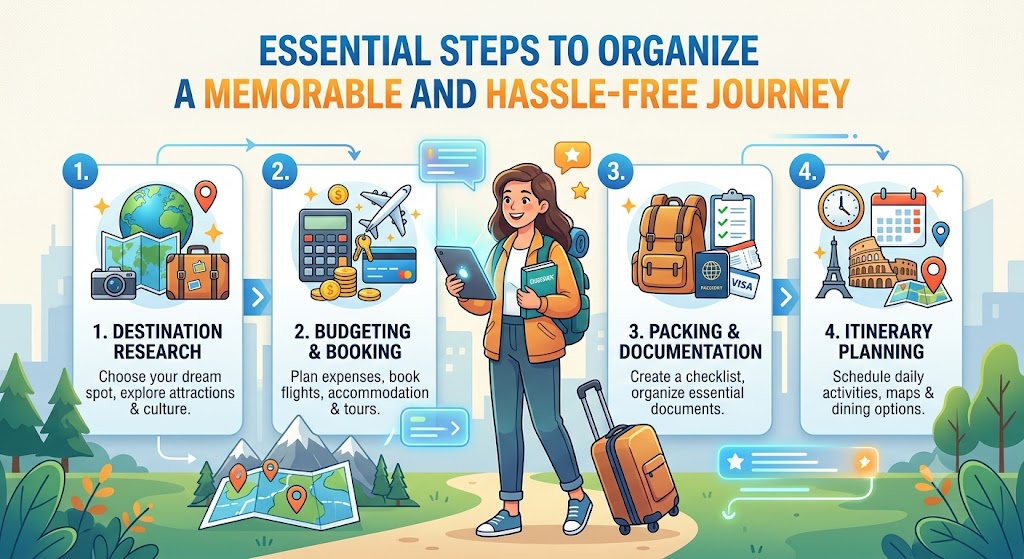
A memorable journey rarely happens by accident. The trips people remember most are usually the result of thoughtful preparation, realistic expectations, and smart decision-making long before departure day arrives. While spontaneous travel can sometimes be exciting, most successful journeys benefit from a clear plan that balances adventure, flexibility, comfort, and practicality. Whether you are planning a family vacation, a solo escape, a romantic getaway, or a long international trip, proper organization can dramatically reduce stress and help create a smoother travel experience from beginning to end.
Many travelers focus heavily on choosing a destination but spend very little time preparing for everything that happens before, during, and after arrival. As a result, they often encounter avoidable problems such as scheduling conflicts, transportation confusion, budget overruns, forgotten documents, and unnecessary stress. Fortunately, organizing a hassle-free journey is much simpler when you follow a structured planning process.
◆ Great Trips Begin With Clear Intentions
Before making reservations or purchasing tickets, take time to understand what kind of travel experience you want. A well-defined purpose helps guide every decision that follows and prevents unnecessary complications later.
Step 1: Define the Purpose of Your Journey
Every trip serves a different purpose. Some travelers want relaxation, while others seek adventure, cultural experiences, nature exploration, shopping opportunities, or quality time with loved ones.
Clarifying your priorities makes it easier to select the right destination, accommodations, transportation methods, and daily activities.
- What type of experience am I looking for?
- How much time is available?
- What activities matter most?
- Who is traveling with me?
- What level of comfort do I prefer?
Step 2: Establish a Practical Budget
Financial surprises are among the most common reasons travelers experience stress. Creating a realistic budget helps ensure that spending remains manageable throughout the trip.
Instead of focusing only on major expenses, account for all potential costs from the beginning.
| Budget Category | Typical Expenses |
|---|---|
| Transportation | Flights, trains, fuel, transfers |
| Accommodation | Hotels, resorts, rentals |
| Meals | Restaurants and snacks |
| Activities | Tours and attractions |
| Emergency Reserve | Unexpected situations |
Adding an emergency buffer can provide peace of mind and prevent financial stress if plans change unexpectedly.
Step 3: Research Before You Reserve
Many travel problems occur because travelers make decisions based on photos alone. A destination may look beautiful online but have transportation challenges, weather concerns, or logistical issues that affect the overall experience.
Research helps travelers make informed decisions and avoid unpleasant surprises after arrival.
✓ Important Research Areas
- Seasonal weather conditions.
- Transportation options.
- Local customs and etiquette.
- Safety recommendations.
- Currency and payment systems.
- Popular attractions.
- Health requirements.
Step 4: Secure Reservations Early
Booking transportation and accommodations early often results in better prices, greater flexibility, and more options. Waiting too long can create unnecessary limitations and increase travel costs.
Popular destinations, holiday periods, and major events frequently cause availability to disappear much faster than expected.
Planning ahead allows travelers to compare alternatives carefully instead of making rushed decisions under pressure.
Step 5: Build a Flexible Itinerary
Many travelers mistakenly believe that every hour of a trip should be planned. In reality, overcrowded itineraries often create stress and reduce enjoyment.
A well-organized journey includes structure without becoming overly restrictive.
- Schedule priority attractions.
- Leave room for exploration.
- Allow recovery time.
- Expect occasional delays.
- Keep some free periods available.
Flexibility allows travelers to adapt to changing conditions while still enjoying planned experiences.
Step 6: Organize Travel Documents Carefully
Travel documentation issues are among the most frustrating problems travelers encounter. Missing paperwork can delay trips, create complications, or even prevent travel altogether.
Several days before departure, review all required documents and confirm that everything remains valid and accessible.
📂 Essential Travel Documents
- Passport or identification.
- Transportation confirmations.
- Accommodation reservations.
- Travel insurance information.
- Emergency contacts.
- Medical information if needed.
Step 7: Pack With Strategy Rather Than Emotion
Packing decisions often reflect anxiety rather than necessity. Travelers frequently bring items they never use while forgetting essentials that would have been genuinely helpful.
Instead of packing for every possible situation, focus on practicality, destination requirements, and planned activities.
Packing lists can significantly reduce the risk of forgetting important items.
- Travel documents.
- Appropriate clothing.
- Medications.
- Chargers and electronics.
- Comfortable footwear.
- Personal essentials.
Step 8: Prepare for Unexpected Situations
Even carefully organized trips encounter occasional disruptions. Flights can be delayed, weather conditions may change, transportation systems can experience interruptions, and schedules sometimes require adjustments.
Preparing for uncertainty helps travelers respond calmly instead of reacting emotionally.
- Maintain emergency funds.
- Save important phone numbers.
- Store digital copies of documents.
- Consider travel insurance.
- Keep backup transportation options available.
Preparation creates confidence and reduces the impact of unexpected events.
Step 9: Prioritize Comfort Throughout the Journey
A memorable journey is not defined only by destinations and attractions. Comfort plays an important role in overall travel satisfaction.
Adequate rest, hydration, nutrition, and realistic schedules help maintain energy and improve the travel experience.
Travelers who take care of themselves physically are often better equipped to enjoy every aspect of the trip.
Step 10: Focus on Experiences Rather Than Perfection
No journey unfolds exactly as planned. Delays, weather changes, and unexpected events are normal parts of travel.
The most memorable experiences often emerge from moments that were never included in the original itinerary.
Approaching travel with flexibility, curiosity, and patience creates opportunities for richer and more meaningful experiences.
★ Journey Organization Blueprint
- Define your travel goals.
- Create a complete budget.
- Research destinations thoroughly.
- Book major reservations early.
- Build a flexible itinerary.
- Prepare travel documents.
- Pack strategically.
- Maintain emergency resources.
- Prioritize comfort and health.
- Stay adaptable throughout the journey.
Final Thoughts
Organizing a memorable and hassle-free journey is not about controlling every detail. It is about preparing thoughtfully, managing expectations, and creating a framework that allows flexibility when circumstances change.
By defining clear objectives, establishing a practical budget, researching destinations, organizing documents, and preparing for unexpected situations, travelers can significantly improve the overall quality of their experiences. Good planning reduces stress while creating more opportunities for enjoyment and discovery.
The most rewarding journeys are rarely the ones that follow a perfect schedule. They are the trips where preparation creates confidence, flexibility encourages exploration, and travelers remain focused on experiences rather than minor inconveniences. With the right approach, every journey can become smoother, more enjoyable, and truly unforgettable.