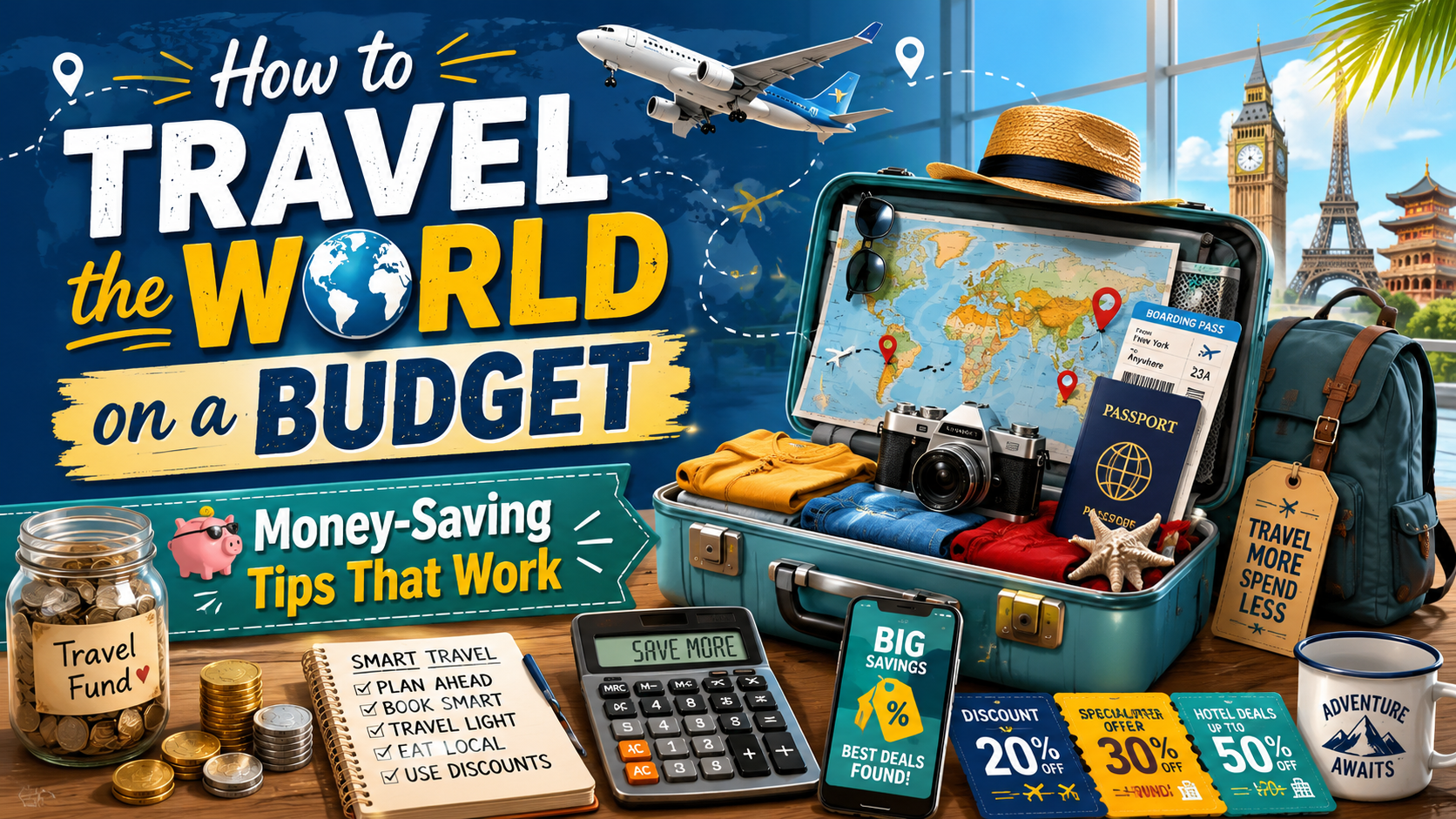
Traveling around the world may sound expensive, but thoughtful planning can make international trips affordable. Budget travel is not about making every journey uncomfortable. It means spending on experiences that matter and reducing costs that add little value. With flexible dates, accommodation, local transportation, and a budget, travelers can explore more places without financial stress.
Start with a Realistic Travel Budget
Before searching for flights, decide how much you can comfortably spend. Divide the amount into transportation, accommodation, food, activities, visas, insurance, and emergency savings. This prevents one exciting booking from consuming most of the budget.
| Category | Include | Saving Move |
|---|---|---|
| Transport | Flights and local travel | Compare dates |
| Stay | Rooms and taxes | Use guesthouses |
| Food | Meals and snacks | Eat locally |
| Activities | Tours and tickets | Mix free attractions |
| Emergency | Delays and medical needs | Reserve ten percent |
Calculate the complete trip cost rather than judging affordability from the flight price alone. Include baggage, transfers, taxes, meals, attraction tickets, mobile data, and daily purchases. Keep 10 to 15 percent untouched for unexpected expenses.
Be Flexible with Dates and Destinations
Flexibility is one of the strongest money-saving tools. Flights and rooms can cost far more during school holidays, festivals, weekends, and major events. Compare several departure dates and consider traveling during shoulder season, when weather may still be pleasant but crowds are smaller.
Keep an open mind about destinations. Instead of choosing one famous city and forcing it into the budget, shortlist several places that offer similar experiences. A less crowded beach town, historic city, or mountain region can provide excellent memories at a lower cost.
Save Money on Flights and Long-Distance Travel
Search early enough to understand normal prices, but avoid assuming that the first deal is the best one. Compare direct flights and connecting options. Check baggage allowances, airport transfer costs, seat fees, and payment charges before deciding.
Buses and trains can be cheaper than short flights. They also allow travelers to see more of the country between major destinations.
Choose Affordable Accommodation Carefully
Hostels are useful for solo travelers, but they are not the only budget option. Guesthouses, homestays, small hotels, university rooms, and apartments can also provide strong value. Couples and families may find a private room cheaper than purchasing several hostel beds.
Location matters as much as price. A slightly more expensive room near public transportation can reduce daily taxi costs and save hours. Read recent reviews, confirm neighborhood safety, and check whether taxes, breakfast, Wi-Fi, towels, or cleaning charges are included.
Accommodation with a kitchen can reduce food costs, especially during longer stays. Weekly discounts may also make slower travel more affordable.
Eat Well Without Overspending
Food is part of the travel experience, so the goal is not to avoid local cuisine. Visit neighborhood restaurants, markets, bakeries, and food courts. Restaurants with large tourist menus and aggressive street promoters are often more expensive.
Book accommodation with breakfast when the price difference is reasonable. Carry a reusable bottle where tap or filtered water is safe. Buy fruit, snacks, and simple meals from supermarkets for travel days. One memorable restaurant meal can feel more special when every meal is not expensive.
Use Local Transportation
Public buses, metro systems, shared vans, and regional trains are usually cheaper than private taxis. Research payment methods before arrival because some systems require a transport card or mobile application. Daily or weekly passes can save money when several journeys are planned.
Walking is free and often reveals markets, neighborhoods, parks, and small businesses that travelers miss from a vehicle. However, do not sacrifice safety to save a small amount. Use reliable transportation late at night, with heavy luggage, or in unfamiliar areas.
Spend Less on Attractions and Experiences
Every activity does not need a ticket. Many destinations offer free walking routes, public beaches, parks, viewpoints, markets, historic neighborhoods, religious sites, and community events. Museums may provide free hours or discounted days.
Choose paid experiences according to personal interests rather than online popularity. A wildlife tour, cooking class, diving trip, or special museum may justify the cost, while several average activities can quickly drain the budget. Booking directly with a reputable local operator may reduce unnecessary commission.
Practical Habits That Protect Your Money
Use a card with low foreign transaction charges and avoid exchanging large amounts at airports. Track daily spending in a mobile note. Keep backup cash and a second card separate from your wallet. Download offline maps and store digital copies of important documents securely.
Check roaming fees before departure and compare local SIM or travel eSIM prices. Carry only the cash and valuables needed for the day. These habits reduce unnecessary spending and financial risk.
Travel Slowly and Avoid Expensive Mistakes
Moving to a new city every day creates repeated transport costs, booking fees, and rushed decisions. Slower travel allows weekly accommodation discounts, cheaper grocery shopping, and more time to understand local transport.
Avoid booking everything without checking cancellation rules. Do not carry only one payment method. Never ignore visa requirements, travel insurance, health precautions, or local laws to save money. A preventable emergency can cost more than all previous savings combined.
Frequently Asked Questions
How much money is needed to travel the world?
The amount depends on destinations, trip length, travel speed, and comfort level. Build the budget around realistic daily costs for each country instead of using one worldwide estimate.
Are hostels always the cheapest accommodation?
No. Guesthouses, homestays, private rooms, and apartments may cost less for couples, groups, or longer stays. Compare the final price and included facilities.
Is travel insurance worth buying?
It can protect against major medical expenses, cancellations, or other covered emergencies. Read the benefits, limits, and exclusions before purchasing.
How can travelers avoid overspending?
Set a daily allowance, record purchases, keep the emergency fund separate, and review spending every few days before small expenses become a serious problem.
What is the biggest budget travel mistake?
Focusing only on cheap prices while ignoring safety, location, hidden fees, and convenience often creates larger costs later.
Travel Better, Not Just Cheaper
Seeing the world on a budget requires patience, research, flexibility, and clear priorities. Save on routine expenses so money remains available for meaningful experiences. Compare complete prices, travel slowly, use local services, and maintain an emergency reserve. The goal is a safe, enjoyable journey that allows continued exploration worldwide without financial regret.