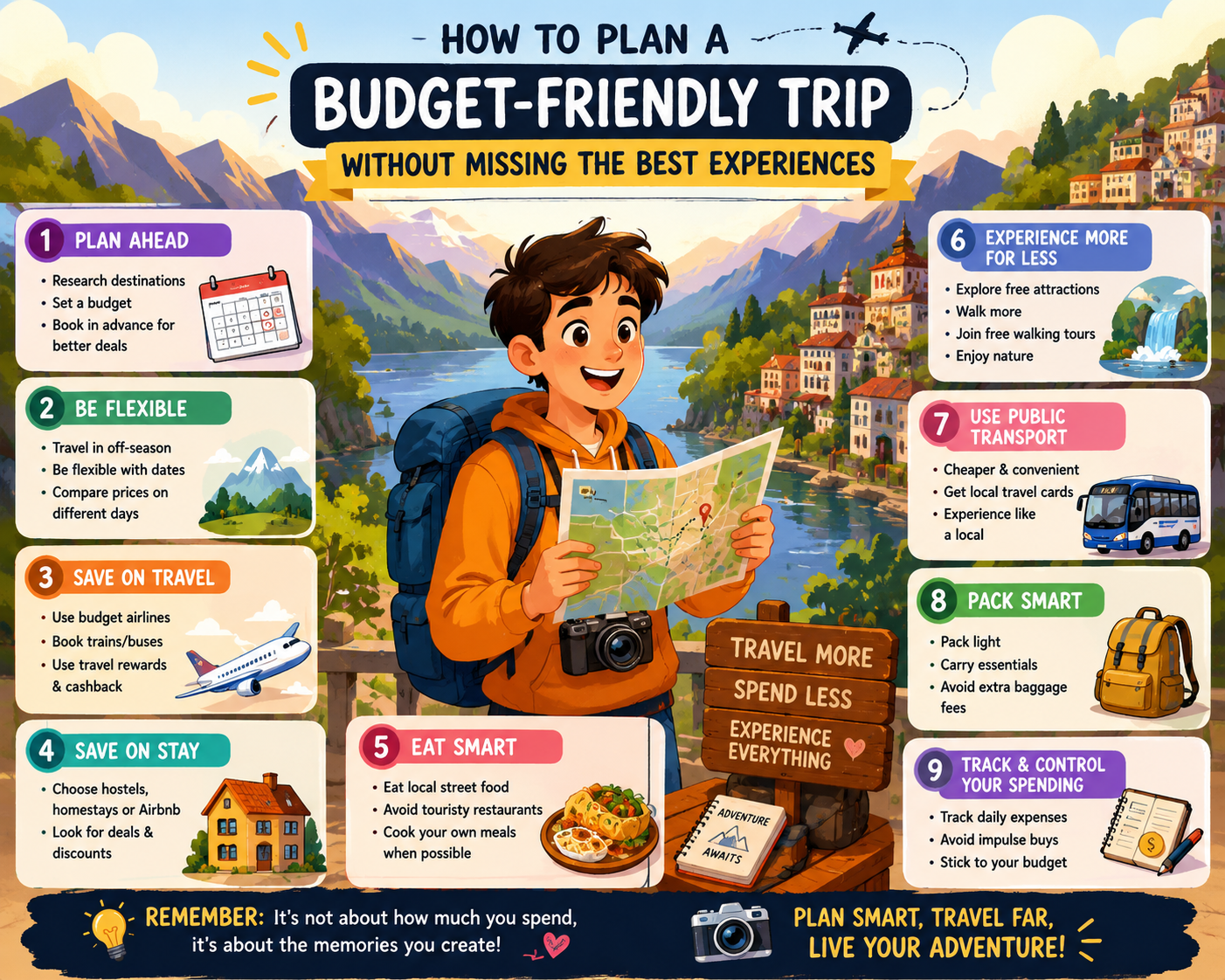
Practical ways to control travel expenses while still enjoying memorable food, attractions, culture, and local experiences.
Travelling on a budget does not mean choosing the cheapest option every time or avoiding the activities that make a destination special. A successful budget trip is about spending wisely, planning important costs early, and protecting money for the experiences that matter most.
With a realistic plan, travellers can enjoy comfortable accommodation, local food, famous attractions, and cultural activities without returning home with unnecessary financial stress. The key is knowing where to save and where spending slightly more can improve the complete journey.
Save money on expenses that add little value, but reserve enough for the activities, meals, and places you would genuinely regret missing.
Set a Realistic Total Budget
Before booking anything, decide how much you can comfortably spend. Include transportation, accommodation, food, local travel, attractions, insurance, shopping, and emergency expenses.
A common mistake is calculating only flights and hotels. Smaller costs such as baggage fees, airport transfers, mobile data, snacks, entrance tickets, taxes, and service charges can quickly increase the final amount.
Divide your money into categories and keep an emergency reserve separate from daily spending. This reserve may help with medical needs, missed transport, replacement items, or an unexpected accommodation change.
Choose a Destination That Matches Your Budget
Some destinations naturally provide better value than others. A city may offer cheap flights but expensive accommodation and food. Another destination may cost more to reach but remain affordable after arrival.
Compare the complete trip cost rather than airfare alone. Research hotel prices, public transport, average meals, attraction fees, visa costs, and the length of stay.
Travelling during the shoulder season can reduce expenses. This period between peak and low seasons often offers pleasant weather, fewer crowds, and lower room prices. However, avoid dates with extreme weather or major seasonal closures simply to save money.
Book Major Expenses Early
Flights, long-distance trains, and popular hotels often become more expensive as the travel date approaches. Booking early usually provides more options and reduces the pressure to accept an unsuitable deal.
Use flexible dates where possible. Travelling one or two days earlier may produce a better fare. Always compare the final cost because a low advertised price may become expensive after adding luggage, seat selection, meals, and airport transfers.
Check cancellation rules before paying. A flexible booking may cost slightly more but can protect your budget if plans change.
Create a Simple Travel Budget
| Expense | Suggested Share | Saving Method |
|---|---|---|
| Transport | 25–35% | Use flexible dates and book early |
| Accommodation | 25–35% | Compare location and facilities |
| Food | 15–20% | Mix local meals with simple food |
| Activities | 10–15% | Prioritise memorable experiences |
| Emergency fund | 5–10% | Keep it separate from daily cash |
These percentages are only a starting point. A road trip may require more transport money, while a city focused on museums and cultural attractions may require a larger activities budget.
Choose Accommodation for Overall Value
The cheapest room is not always the best deal. A distant hotel may require expensive daily transport, while centrally located accommodation can save both time and money.
Compare hostels, guesthouses, budget hotels, homestays, and serviced apartments. Accommodation with a small kitchen may be useful for longer stays because travellers can prepare breakfast or simple meals.
Read recent reviews and focus on cleanliness, safety, transport access, noise, and hidden fees. Check whether breakfast, Wi-Fi, taxes, luggage storage, and cleaning charges are included.
Prioritise the Best Experiences
Make a list of the activities you would regret missing. These might include a famous museum, wildlife tour, historic site, scenic train journey, local food experience, or live performance.
Reserve money for these priorities before spending on souvenirs or unnecessary room upgrades. One meaningful paid experience is often more memorable than several average attractions selected only because they are cheap.
Balance paid activities with free options such as public parks, beaches, markets, neighbourhood walks, viewpoints, cultural events, and free museum hours. Group nearby attractions into the same day to reduce transport costs.
Unique experiences, safe accommodation, insurance, and important transport.
Unnecessary upgrades, tourist-zone meals, excessive shopping, and short taxi rides.
Enjoy Local Food Without Overspending
Food is an important part of travelling, so avoiding every restaurant can reduce the enjoyment of the trip. Instead, decide which meals deserve extra spending.
Choose one or two special dining experiences and keep other meals simple. Local bakeries, food markets, supermarkets, neighbourhood cafés, and family-run restaurants often provide better value than restaurants beside famous landmarks.
Lunch menus may cost less than dinner menus. Carry a refillable bottle where tap water is safe and keep light snacks for long sightseeing days.
Use Public Transport and Walk
Taxis and private transfers can consume a large part of the daily budget. Research buses, metros, trains, ferries, and travel passes before arrival.
A daily or weekly pass may save money, but only if you plan to use it enough. Compare the pass with individual ticket prices.
Walking is free and often reveals local shops, architecture, street art, and neighbourhood life. However, taxis may still be worthwhile for late-night safety, heavy luggage, or poorly connected routes.
Avoid Tourist Traps and Hidden Costs
Check official attraction prices before visiting and purchase tickets from official websites or authorised sellers. Be cautious of people promising special access or creating false urgency.
Review menus before sitting down, confirm whether service charges are included, and ask about additional tour expenses. Highly promoted locations are not always the most rewarding or affordable.
Also check baggage rules carefully. Overweight luggage fees can damage a travel budget quickly. Packing light makes public transport easier and reduces dependence on taxis.
Include Insurance and Track Spending
Travel insurance may appear optional, but medical treatment, cancellation, theft, or lost luggage can cost far more than a suitable policy. Review coverage limits, exclusions, excess amounts, and claim requirements.
During the journey, record expenses using a notes application, spreadsheet, or budgeting app. Review spending each evening. If food costs are higher than expected, choose a free attraction or reduce shopping the following day.
Use a flexible daily target rather than a strict limit that creates stress. Spending less on one day can create room for a special experience later.
Frequently Asked Questions
How far in advance should a trip be planned?
For popular destinations, beginning research several months before departure usually provides better prices and more choices.
Is the cheapest flight always the best?
No. Compare baggage fees, airport location, travel time, transfer costs, and cancellation conditions.
Can a budget trip include premium experiences?
Yes. Save on lower-priority expenses and spend intentionally on one or two experiences that matter most.
What is the easiest way to lower daily costs?
Stay in a well-connected area, walk when practical, use public transport, and group nearby attractions together.
Final Thoughts
A budget-friendly trip is not about removing every comfort or memorable activity. It is about making deliberate decisions. Set a realistic budget, research the complete destination cost, book important expenses early, and reserve money for the experiences you value most.
Save through smart accommodation choices, public transport, local food, free attractions, careful packing, and regular spending checks. When travellers control unnecessary expenses without sacrificing their priorities, they can enjoy a comfortable, meaningful, and rewarding journey without overspending.
Travel note: Prices, entry requirements, transportation options, and seasonal conditions may change. Always confirm current information before booking.