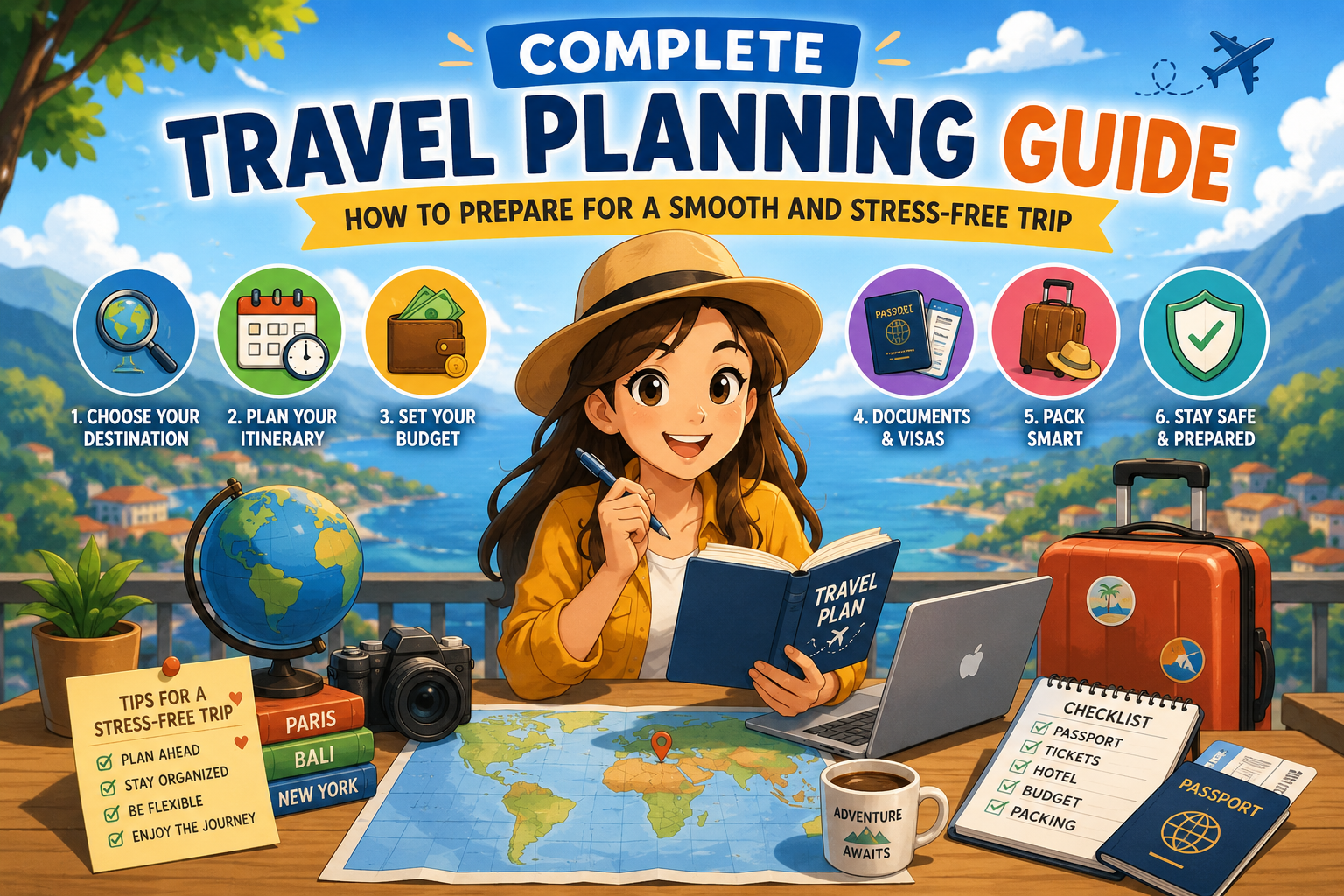
Travel can be exciting, refreshing and educational, but poor preparation can quickly turn it into an expensive and tiring experience. Missed connections, invalid documents, overpacked bags, unrealistic schedules and unexpected expenses are common sources of travel stress.
A good plan does not remove all uncertainty. Instead, it gives you enough structure to make confident decisions when circumstances change. Whether you are arranging a weekend break, family holiday, international adventure or business trip, the following steps can help you travel with greater comfort and control.
Start with the Purpose of Your Trip
Before comparing flights or hotels, decide what you want from the journey. A relaxing beach holiday needs a different schedule from a city tour filled with museums, shopping and nightlife. A family trip requires extra attention to meal times, rest breaks and child-friendly activities.
Write down your main priorities. These may include relaxation, food, history, nature, photography, adventure, family time or cultural experiences. Clear priorities make it easier to reject unnecessary activities and spend money on what matters most.
Choose the Destination Carefully
Selecting a destination should involve more than finding attractive photographs. Consider the climate, travel time, transport system, local costs, accommodation choices and activities available during your preferred dates.
Also think about the people travelling with you. A destination that is ideal for solo travellers may not suit elderly family members or young children. Check walking distances, accessibility, food options and the availability of medical facilities where relevant.
Create a Realistic Travel Budget
Your budget should include more than tickets and accommodation. Small daily expenses can become a major part of the total cost, especially on a longer journey.
| Budget Category | What to Include | Planning Approach |
|---|---|---|
| Transport | Flights, trains, taxis, fuel, parking and local passes | Compare the complete journey cost, not only the main ticket |
| Accommodation | Nightly rate, taxes, deposits and resort or cleaning fees | Check the final payable amount before booking |
| Food | Meals, drinks, snacks and service charges | Mix restaurant meals with affordable local options |
| Activities | Entry tickets, guided tours and equipment rental | Book essential activities and leave space for spontaneous plans |
| Emergency fund | Delays, replacement items and unexpected transport | Keep this amount separate from everyday spending |
Add a financial buffer instead of planning to spend every available pound. A reserve can help cover a missed train, additional hotel night, medical need or damaged item without disrupting the entire trip.
Book Transport at the Right Time
Compare several travel dates and departure points when possible. A cheaper ticket is not always the best option if it includes long layovers, expensive airport transfers or inconvenient arrival times.
Before confirming a booking, review baggage allowances, change conditions, cancellation terms and passenger details. A small spelling error or incorrect date can be costly to correct.
Allow enough connection time when using separate tickets. If the first service is delayed, the second provider may not be responsible for helping you reach the next departure.
Select Accommodation by Location and Value
A low room price may become less attractive when the property is far from the places you plan to visit. Long daily journeys can increase transport costs and reduce sightseeing time.
Read recent guest feedback with attention to cleanliness, neighbourhood safety, noise, internet access and staff support. Check the distance using a map rather than relying only on descriptions such as “near the centre.”
Confirm check-in times, identification requirements, payment rules and late-arrival procedures. Save the property address and contact details offline.
Check Documents and Entry Requirements
For international travel, verify passport validity, visa requirements, transit rules and permitted length of stay using official sources. Requirements can vary according to nationality, destination, route and travel purpose.
Review your documents early rather than waiting until the week of departure. Keep digital and paper copies of important information, but protect them from unauthorised access.
Build a Flexible Daily Itinerary
An itinerary should guide the trip rather than control every minute. Choose one or two major activities for each day and group nearby attractions together.
Allow time for meals, transport, queues and rest. Trying to visit too many places can leave travellers exhausted and reduce enjoyment. Include at least one lighter day during a longer trip.
- Mark essential bookings. Add fixed transport, tours and timed-entry tickets first.
- Group nearby places. This reduces unnecessary travel and saves energy.
- Add realistic travel time. Include walking, waiting and possible delays.
- Keep open periods. Leave room for rest, local discoveries or changed plans.
- Save the itinerary offline. Do not depend entirely on mobile data.
Pack According to the Trip
Prepare a packing list based on weather, activities, local customs and baggage limits. Choose clothing that can be combined into several outfits instead of packing a separate option for every day.
Keep medicines, identification, valuables, chargers and one basic change of clothing in your hand luggage. Checked baggage can occasionally be delayed, so essential items should remain accessible.
Label luggage discreetly and leave some unused space for purchases. Heavy bags are harder to manage on stairs, crowded transport and uneven streets.
Prepare Your Phone and Finances
Download offline maps, transport applications, booking confirmations and translation support before departure. Save emergency contacts and the address of your accommodation.
Carry more than one payment method and keep them in separate locations. Check foreign-transaction charges, cash withdrawal fees and daily card limits. Avoid carrying all available cash in one wallet.
Public charging points and unfamiliar Wi-Fi networks may create privacy risks. Use secure connections, protect devices with passwords and avoid accessing sensitive financial accounts unnecessarily.
Plan for Health and Safety
Review destination-specific health information before travelling. Carry necessary medicines in suitable packaging and take enough for the full journey, plus a reasonable reserve where permitted.
Travel insurance may help with eligible medical emergencies, cancellations or lost belongings, but policies vary. Read exclusions carefully, especially for existing medical conditions, expensive equipment and adventure activities.
Share your basic itinerary with a trusted person. Stay aware of local conditions, protect valuables and avoid displaying large amounts of money in public.
Common Travel-Planning Mistakes
Frequently Asked Questions
How early should a trip be planned?
Begin once your dates and destination are reasonably certain. International travel, major events and peak seasons generally benefit from earlier preparation.
How can travel stress be reduced?
Use a checklist, avoid an overloaded itinerary, keep important documents organised and maintain extra time between major connections.
Is travel insurance necessary?
It is not identical for every journey, but it can provide useful protection. Compare coverage, limits and exclusions before purchasing.
Should every activity be booked in advance?
No. Reserve activities that may sell out, but keep part of the schedule flexible for weather changes and spontaneous discoveries.
What should remain in hand luggage?
Keep documents, medicines, valuables, chargers, essential toiletries and a basic clothing change where baggage rules allow.
Final Thoughts
Successful travel planning is about creating a balance between preparation and flexibility. Clear bookings, organised documents and a sensible budget provide structure, while free time and backup options help you adapt when plans change.
Start with the purpose of the trip, research practical details and complete important tasks early. Pack only what you can manage comfortably, protect your money and information, and avoid filling every hour with activities.
A thoughtful plan allows you to spend less time solving preventable problems and more time enjoying the destination. Preparation may begin before departure, but its greatest value is the confidence and freedom it provides throughout the journey.