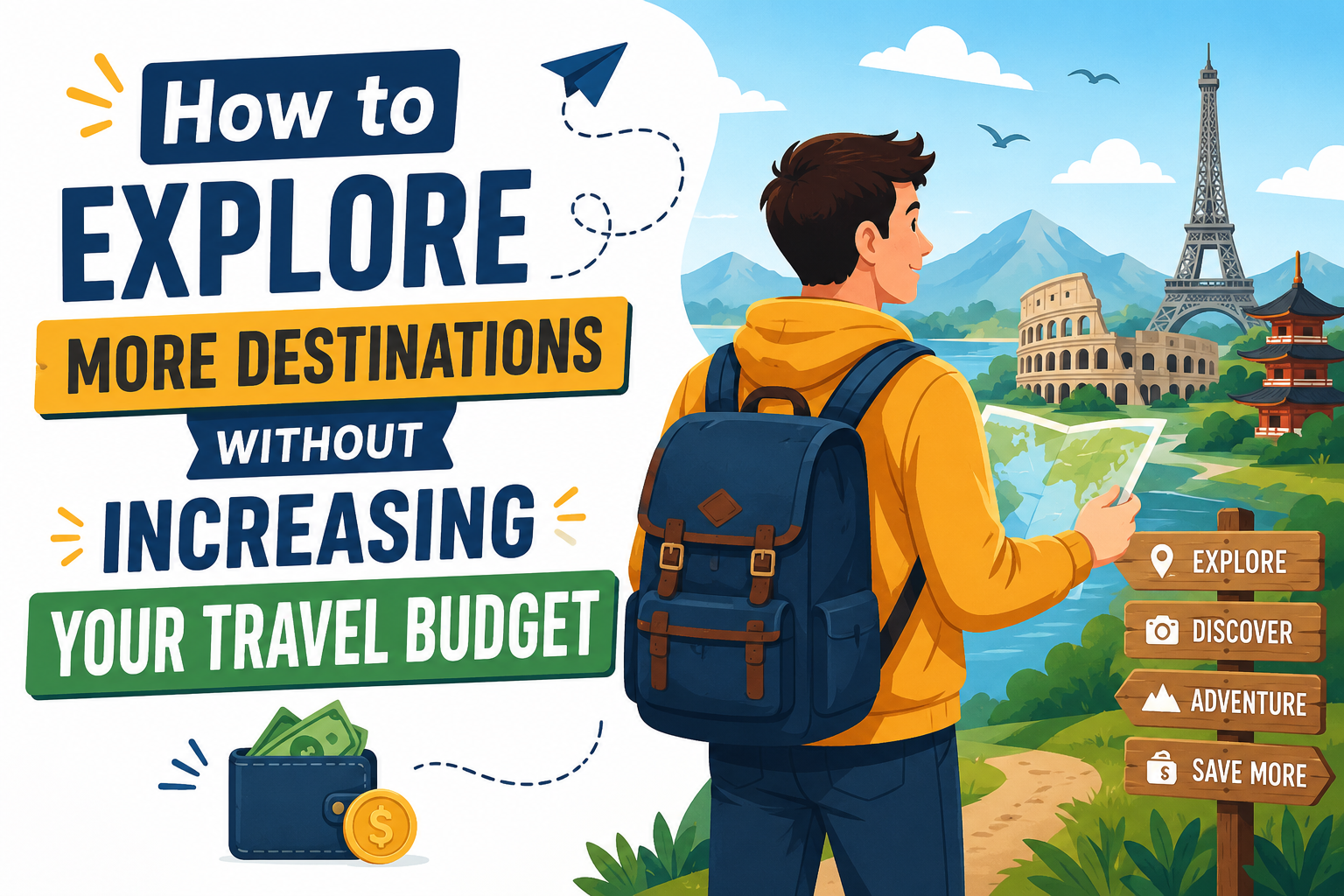
Many people assume that traveling more requires spending significantly more money. As a result, countless dream destinations remain postponed because travelers believe their budgets are too limited. The reality, however, is often very different. Experienced travelers frequently visit more places not because they earn more money, but because they travel smarter. By making strategic decisions before and during a trip, it is possible to explore more destinations, take additional vacations, and enjoy meaningful travel experiences without dramatically increasing overall travel expenses.
Travel budgeting is not about eliminating enjoyment or choosing the cheapest option every time. Instead, it involves maximizing value, avoiding unnecessary expenses, and making thoughtful choices that stretch travel funds further. Small adjustments in planning, timing, transportation, accommodation, and spending habits can create opportunities to travel more often while maintaining a comfortable and rewarding experience.
◆ Travel More by Spending Smarter
The goal is not necessarily to spend less on every trip. The goal is to get more travel experiences from the same overall budget by improving how money is allocated and managed.
Focus on Value Rather Than Luxury
One of the biggest misconceptions about travel is that memorable experiences require luxury accommodations, premium flights, and expensive activities. In reality, many of the most meaningful travel memories come from exploring new places, meeting people, enjoying local culture, and discovering unique experiences.
Choosing comfortable but reasonably priced accommodations often frees up funds for additional destinations, activities, or future trips.
- Experiences over unnecessary upgrades.
- Comfort over luxury.
- Local activities over expensive attractions.
- Flexibility over convenience premiums.
- Long-term travel goals over short-term indulgences.
Travel During Less Popular Seasons
Timing can have a major impact on travel costs. Popular destinations often experience significant price increases during peak travel seasons due to higher demand.
Traveling during shoulder seasons or quieter periods frequently results in lower prices for flights, accommodations, and attractions while still providing excellent experiences.
| Travel Period | Typical Benefits |
|---|---|
| Peak Season | Maximum activity, higher costs |
| Shoulder Season | Balanced weather and pricing |
| Off-Season | Lowest costs and fewer crowds |
The savings achieved through seasonal flexibility can often fund additional travel opportunities throughout the year.
Be Flexible With Destinations
Many travelers become fixated on a specific destination without considering equally rewarding alternatives. Popular locations often command premium prices simply because they are widely known.
Exploring similar but less crowded destinations can deliver comparable experiences at significantly lower costs.
For example, lesser-known coastal towns, mountain regions, or cultural cities often provide authentic experiences while requiring a smaller travel budget.
✦ Alternative Destination Strategy
- Research regional alternatives.
- Consider nearby countries.
- Look beyond famous tourist hubs.
- Explore emerging travel destinations.
- Prioritize experiences rather than reputation.
Plan Transportation Carefully
Transportation often represents one of the largest travel expenses. Small improvements in booking strategy can create meaningful savings over time.
Comparing transportation options, remaining flexible with travel dates, and booking strategically can help reduce overall costs without sacrificing convenience.
Even moderate savings on transportation accumulate significantly when applied across multiple trips.
- Book early when possible.
- Compare multiple routes.
- Use flexible travel dates.
- Consider alternative airports.
- Travel with carry-on luggage when practical.
Reduce Accommodation Costs Without Sacrificing Comfort
Accommodation expenses can consume a significant portion of a travel budget, particularly in popular destinations.
Many travelers discover that they spend relatively little time in their room beyond sleeping and preparing for daily activities. Choosing practical accommodations instead of luxury options often creates substantial savings.
The key is finding the balance between comfort, safety, location, and affordability.
Avoid Common Budget Leaks
Many travel budgets are affected not by major expenses but by numerous small purchases that accumulate over time. These costs often go unnoticed until the trip concludes.
Being aware of spending patterns can help travelers preserve resources for future adventures.
⚠ Common Travel Budget Leaks
- Unnecessary transportation upgrades.
- Impulse souvenir purchases.
- Frequent convenience spending.
- Last-minute bookings.
- Excess baggage fees.
- Poor currency exchange decisions.
Use Daily Spending Limits
A practical way to maintain budget control is to establish approximate daily spending targets. This approach helps travelers monitor expenses throughout the trip rather than discovering problems afterward.
Daily budgets provide flexibility while encouraging mindful decision-making.
Travelers who monitor spending consistently often avoid unexpected financial stress.
Prioritize Free and Low-Cost Experiences
Many of the world’s best travel experiences cost little or nothing. Beaches, hiking trails, local markets, cultural festivals, scenic viewpoints, historic neighborhoods, and public parks often provide memorable experiences without significant expense.
Travelers sometimes overlook these opportunities while focusing exclusively on ticketed attractions.
Combining paid attractions with free experiences creates a balanced and cost-effective itinerary.
- Walking tours.
- Nature exploration.
- Local markets.
- Public beaches.
- Historic districts.
- Community events.
Think Long-Term Rather Than Trip-by-Trip
Travelers who successfully explore multiple destinations each year often approach travel as a long-term lifestyle rather than a series of isolated vacations.
Instead of maximizing spending on a single trip, they allocate resources strategically across multiple journeys.
This mindset allows travelers to experience more destinations over time while maintaining financial stability.
Build a Dedicated Travel Fund
A dedicated travel fund creates consistency and reduces financial pressure. Setting aside a small amount regularly can gradually build resources for future adventures.
Even modest contributions accumulate over time and create opportunities that might otherwise seem unaffordable.
Planning ahead transforms travel from an occasional luxury into an achievable goal.
★ Travel More Blueprint
- Travel during less expensive periods.
- Choose value over luxury.
- Explore alternative destinations.
- Book transportation strategically.
- Control accommodation costs.
- Monitor daily spending.
- Prioritize experiences over purchases.
- Avoid unnecessary fees.
- Use a long-term travel mindset.
- Maintain a dedicated travel fund.
Final Thoughts
Exploring more destinations does not always require a larger travel budget. In many cases, it simply requires smarter planning, better spending decisions, and a willingness to prioritize experiences over unnecessary expenses. Small adjustments in travel habits can create surprisingly large opportunities over time.
By choosing value-focused accommodations, traveling during less expensive periods, avoiding common budget leaks, and focusing on meaningful experiences, travelers can significantly increase the number of destinations they visit without dramatically increasing costs.
Travel is ultimately about discovery, learning, and creating memories. With thoughtful budgeting and strategic planning, it is possible to enjoy more journeys, experience more cultures, and explore more of the world while staying within a comfortable financial framework.