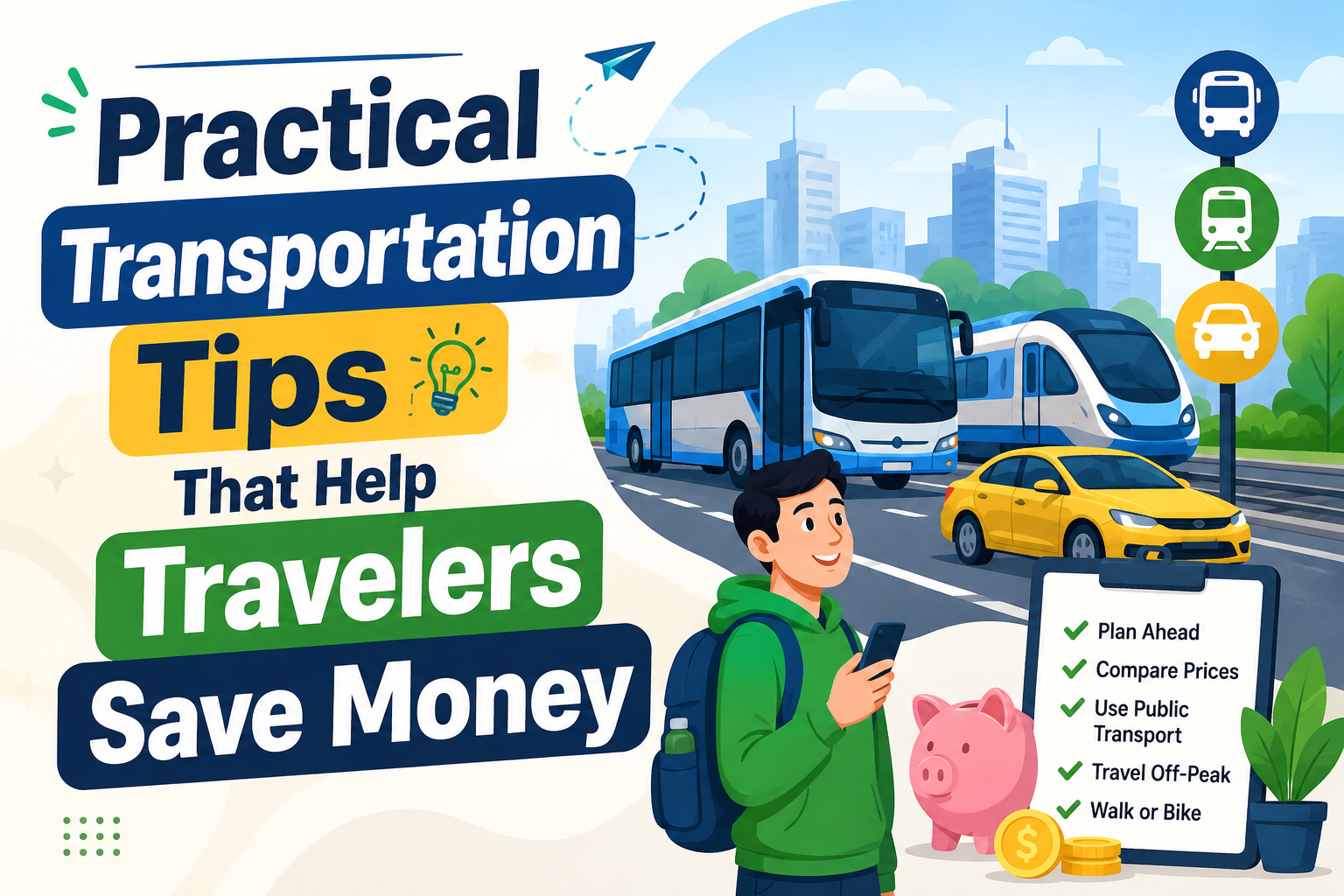
Transportation is often one of the largest travel expenses, yet it is also one of the areas where travelers can save significant amounts of money through smart planning. Flights, trains, buses, rental vehicles, taxis, ride-sharing services, and local transportation costs can quickly consume a large portion of a travel budget if not managed carefully. Fortunately, experienced travelers understand that saving money on transportation does not necessarily mean sacrificing convenience or comfort. Strategic planning and informed decisions can dramatically reduce travel expenses while still allowing travelers to enjoy smooth and enjoyable journeys.
Many people focus heavily on finding affordable accommodations and dining options but overlook transportation costs until they begin adding up. Small decisions made before departure and during the trip can have a surprisingly large impact on overall spending. Learning how to manage transportation efficiently allows travelers to stretch their budgets further and potentially visit more destinations without increasing total travel expenses.
🚆 Transportation Savings Begin Before the Trip Starts
Many of the best transportation savings opportunities occur during the planning stage. Travelers who compare options carefully often spend significantly less than those who book quickly without research.
Book Transportation Early When Possible
One of the simplest and most effective ways to reduce transportation expenses is to make reservations well in advance. Airlines, rail services, and many other transportation providers frequently offer lower prices when bookings are made early.
As travel dates approach and availability decreases, prices often rise substantially.
- Greater route availability.
- Lower average prices.
- More schedule flexibility.
- Better seat selection.
- Reduced last-minute stress.
Planning ahead provides more options and often results in meaningful savings.
Remain Flexible With Travel Dates
Transportation costs often fluctuate depending on demand. Traveling during weekends, holidays, or peak vacation periods can significantly increase expenses.
Travelers who maintain flexibility with departure and return dates frequently discover more affordable options.
| Travel Timing | Typical Cost Impact |
|---|---|
| Peak Holiday Periods | Highest demand and pricing |
| Midweek Travel | Often lower pricing |
| Shoulder Seasons | Better overall value |
Even small adjustments to travel dates can sometimes generate substantial savings.
Compare Multiple Transportation Options
Many travelers automatically choose a familiar transportation method without considering alternatives. Depending on the destination and distance, trains, buses, ferries, flights, or shared transportation may provide better value.
Comparing multiple options often reveals opportunities to save money while maintaining convenience.
The most economical choice is not always immediately obvious without proper research.
✓ Transportation Comparison Checklist
- Total ticket cost.
- Travel duration.
- Baggage fees.
- Transfer requirements.
- Comfort level.
- Accessibility.
Travel With Less Luggage
Excess baggage fees have become a common source of unnecessary travel expenses. Many transportation providers charge additional fees for checked luggage or overweight bags.
Packing efficiently can reduce these costs while making travel easier and more convenient.
Travelers who learn to pack strategically often enjoy both financial and practical benefits.
- Reduced baggage fees.
- Faster airport processing.
- Easier mobility.
- Less waiting time.
- Greater flexibility.
Use Public Transportation Whenever Practical
Public transportation systems often provide excellent value compared to taxis and private transportation services. Many cities offer reliable buses, trains, metro systems, and trams that connect major attractions efficiently.
Using local transportation not only reduces expenses but can also provide a more authentic travel experience.
Many destinations offer visitor passes that provide unlimited transportation access for a fixed period.
Walk More and Explore Slowly
Walking is one of the most affordable forms of transportation available. In addition to saving money, walking often allows travelers to discover neighborhoods, shops, restaurants, and attractions that might otherwise be overlooked.
Many city centers are highly walkable, making it possible to reduce transportation expenses significantly.
Travelers frequently find that some of their most memorable discoveries occur while exploring on foot.
🚶 Walking Benefits
- No transportation cost.
- Better local exploration.
- Flexible schedules.
- Health benefits.
- Unexpected discoveries.
Avoid Last-Minute Transportation Decisions
Transportation booked at the last moment often costs significantly more than planned alternatives. This applies not only to flights but also to trains, buses, rental vehicles, and local transfers.
Advance planning reduces the likelihood of paying premium prices due to limited availability.
Creating a transportation strategy before departure can prevent many unnecessary expenses.
Choose Accommodation With Transportation in Mind
Accommodation and transportation costs are closely connected. A cheaper hotel located far from major attractions may require expensive daily transportation.
Evaluating total travel costs rather than accommodation prices alone often results in better value.
Sometimes paying slightly more for a convenient location reduces overall expenses considerably.
| Location Type | Transportation Impact |
|---|---|
| Central Location | Lower daily transportation costs |
| Remote Location | Higher transportation spending |
Watch for Hidden Transportation Costs
Some transportation expenses are less obvious than ticket prices. Baggage fees, airport transfers, fuel costs, parking fees, tolls, seat selection charges, and booking fees can quickly increase total spending.
Understanding the complete cost of transportation helps travelers make more accurate comparisons.
Ignoring these additional expenses can lead to budget surprises later.
⚠ Hidden Costs to Consider
- Checked baggage fees.
- Airport transportation.
- Parking charges.
- Fuel expenses.
- Booking fees.
- Toll roads.
Think About the Entire Journey
Transportation planning should consider the entire travel experience rather than focusing on a single segment. A low-cost ticket may not provide the best overall value if it requires expensive transfers or inconvenient schedules.
Looking at the complete journey often reveals more practical and cost-effective solutions.
Balanced decision-making typically produces the best travel outcomes.
★ Transportation Savings Blueprint
- Book transportation early.
- Stay flexible with travel dates.
- Compare multiple travel options.
- Pack efficiently.
- Use public transportation.
- Walk whenever practical.
- Avoid last-minute bookings.
- Consider location-related costs.
- Watch for hidden fees.
- Evaluate total journey value.
Final Thoughts
Transportation costs can significantly influence the overall affordability of a trip, but they also present some of the greatest opportunities for savings. Travelers who plan strategically, compare options carefully, and remain flexible often spend far less than those who make decisions based solely on convenience or habit.
From booking early and traveling light to using public transportation and avoiding hidden fees, many small adjustments can produce meaningful savings over time. These savings can then be redirected toward accommodations, activities, future trips, or additional destinations.
The most successful travel budgets are built on smart decisions rather than major sacrifices. By approaching transportation thoughtfully, travelers can enjoy comfortable, efficient, and affordable journeys while making the most of every travel opportunity.