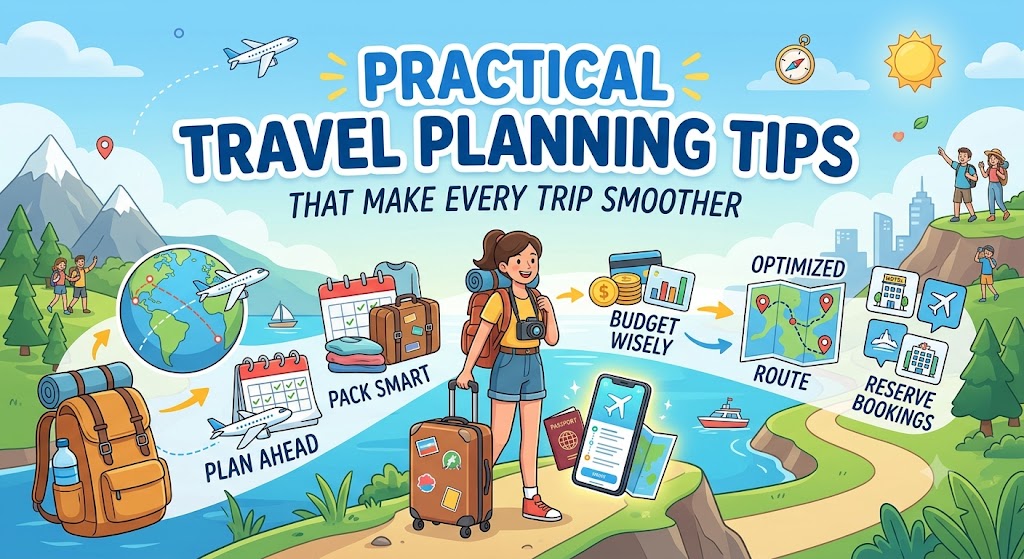
Every traveler dreams of a smooth and enjoyable trip. Unfortunately, travel does not always go exactly as planned. Delayed flights, forgotten documents, unexpected expenses, transportation confusion, poor scheduling, and last-minute booking issues can quickly turn an exciting journey into a stressful experience. The good news is that many travel problems are preventable. With practical planning and a few smart habits, travelers can reduce unnecessary stress and make every trip more comfortable, organized, and enjoyable.
Whether you are planning a short weekend getaway, a family vacation, a business trip, or an international adventure, preparation plays a major role in determining how smoothly your travel experience unfolds. Successful travelers are not necessarily lucky—they simply take time to prepare for common situations before leaving home.
◆ Smooth Travel Starts Before Departure
Most travel problems begin long before the journey starts. Poor planning, rushed bookings, unrealistic schedules, and forgotten details often create unnecessary stress. A little preparation can eliminate many common travel headaches.
Start Planning Earlier Than You Think
One of the simplest ways to improve any trip is to start planning early. Waiting until the last minute often leads to higher prices, limited options, and rushed decisions.
Early planning provides more flexibility when choosing transportation, accommodations, and activities. It also gives travelers time to compare options, research destinations, and identify potential issues before they become problems.
Even a few extra weeks of preparation can make a noticeable difference in both cost and convenience.
- More accommodation choices.
- Better transportation options.
- Lower travel costs.
- Reduced planning stress.
- More time to research activities.
Create a Realistic Travel Budget
Unexpected expenses are one of the biggest causes of travel frustration. Many travelers focus only on transportation and accommodation while overlooking smaller costs that accumulate throughout the trip.
A complete travel budget should account for all major categories of spending.
| Expense Type | Examples |
|---|---|
| Transportation | Flights, trains, taxis, fuel |
| Accommodation | Hotels, rentals, resorts |
| Food | Restaurants and snacks |
| Activities | Tours and attractions |
| Emergency Fund | Unexpected situations |
Including a financial cushion helps prevent minor surprises from becoming major problems.
Research Your Destination Thoroughly
Understanding your destination before arrival makes travel significantly easier. Many common problems occur simply because travelers are unfamiliar with local conditions.
Researching transportation systems, weather patterns, local customs, payment methods, and popular attractions can save time and prevent confusion.
✓ Helpful Research Topics
- Weather forecasts.
- Transportation options.
- Local currency information.
- Emergency services.
- Popular tourist areas.
- Cultural expectations.
- Safety recommendations.
Keep Travel Documents Organized
Nothing disrupts a trip faster than missing travel documents. Passports, identification cards, booking confirmations, tickets, and insurance information should be organized before departure.
Many experienced travelers keep both printed and digital copies of important documents in separate locations for added security.
Having quick access to essential information reduces stress during check-ins, border crossings, and unexpected situations.
- Passport or identification.
- Transportation confirmations.
- Accommodation details.
- Travel insurance information.
- Emergency contacts.
- Payment information.
Avoid Overloading Your Itinerary
Many travelers try to fit too many activities into a limited amount of time. While ambitious itineraries may look exciting on paper, they often lead to exhaustion rather than enjoyment.
Travel becomes more enjoyable when there is room for flexibility. Delays, weather changes, and unexpected discoveries are normal parts of any trip.
Instead of scheduling every hour, focus on a few meaningful activities each day while leaving space for spontaneous experiences.
◈ Balanced Travel Planning
- Prioritize must-see attractions.
- Leave free time between activities.
- Avoid long travel days repeatedly.
- Allow time for rest.
- Expect occasional schedule changes.
Pack Smarter, Not Heavier
Overpacking creates unnecessary inconvenience. Heavy luggage makes transportation more difficult and often results in carrying items that are never used.
Packing strategically helps travelers move more comfortably while reducing stress throughout the journey.
Focus on versatile clothing, essential items, and weather-appropriate gear rather than preparing for every possible scenario.
- Create a packing checklist.
- Choose versatile clothing.
- Limit unnecessary electronics.
- Pack medications separately.
- Keep important items accessible.
Allow Extra Time for Transportation
Transportation delays are among the most common travel disruptions. Flights can be delayed, roads can become congested, and public transportation schedules may change unexpectedly.
Building extra time into your travel schedule helps reduce stress when unexpected situations occur.
Rushing between connections often creates unnecessary anxiety and increases the risk of missed departures.
Stay Flexible When Things Change
Even the best travel plans encounter occasional disruptions. Weather conditions, transportation issues, and schedule changes are part of the travel experience.
Travelers who remain flexible often enjoy their trips more because they focus on solutions rather than frustrations.
Adaptability can turn unexpected situations into memorable experiences rather than travel disasters.
◆ Flexibility Mindset
- Expect minor disruptions.
- Maintain backup options.
- Stay patient during delays.
- Focus on the overall experience.
- Keep a positive attitude.
Protect Your Health and Well-Being
Travel is more enjoyable when physical well-being remains a priority. Long travel days, irregular schedules, and unfamiliar environments can affect energy levels.
Simple habits such as staying hydrated, getting enough rest, eating balanced meals, and taking breaks can improve the overall travel experience significantly.
Healthy travelers are better equipped to enjoy activities and handle unexpected challenges.
Focus on the Experience Rather Than Perfection
Social media often creates unrealistic travel expectations. In reality, every trip includes small inconveniences, delays, and unexpected moments.
The most memorable travel experiences usually come from discoveries, conversations, cultural experiences, and personal growth rather than perfectly executed schedules.
Approaching travel with realistic expectations helps reduce disappointment and increase enjoyment.
◆ Practical Travel Planning Checklist
- Start planning early.
- Create a complete travel budget.
- Research destinations thoroughly.
- Organize travel documents.
- Keep itineraries realistic.
- Pack strategically.
- Allow extra transportation time.
- Maintain flexibility.
- Prioritize health and comfort.
- Focus on enjoying the journey.
Final Thoughts
Smooth travel experiences rarely happen by accident. They are usually the result of thoughtful preparation, realistic expectations, and practical planning decisions made before departure. While no trip can eliminate every unexpected situation, travelers can significantly reduce stress by focusing on the fundamentals.
Creating a realistic budget, researching destinations, organizing documents, packing efficiently, and maintaining flexibility can transform the overall travel experience. These simple habits often have a greater impact than expensive upgrades or complicated itineraries.
The goal of travel is not perfection. It is exploration, enjoyment, learning, and creating memorable experiences. With smart preparation and a flexible mindset, every trip can become smoother, more comfortable, and far more rewarding.