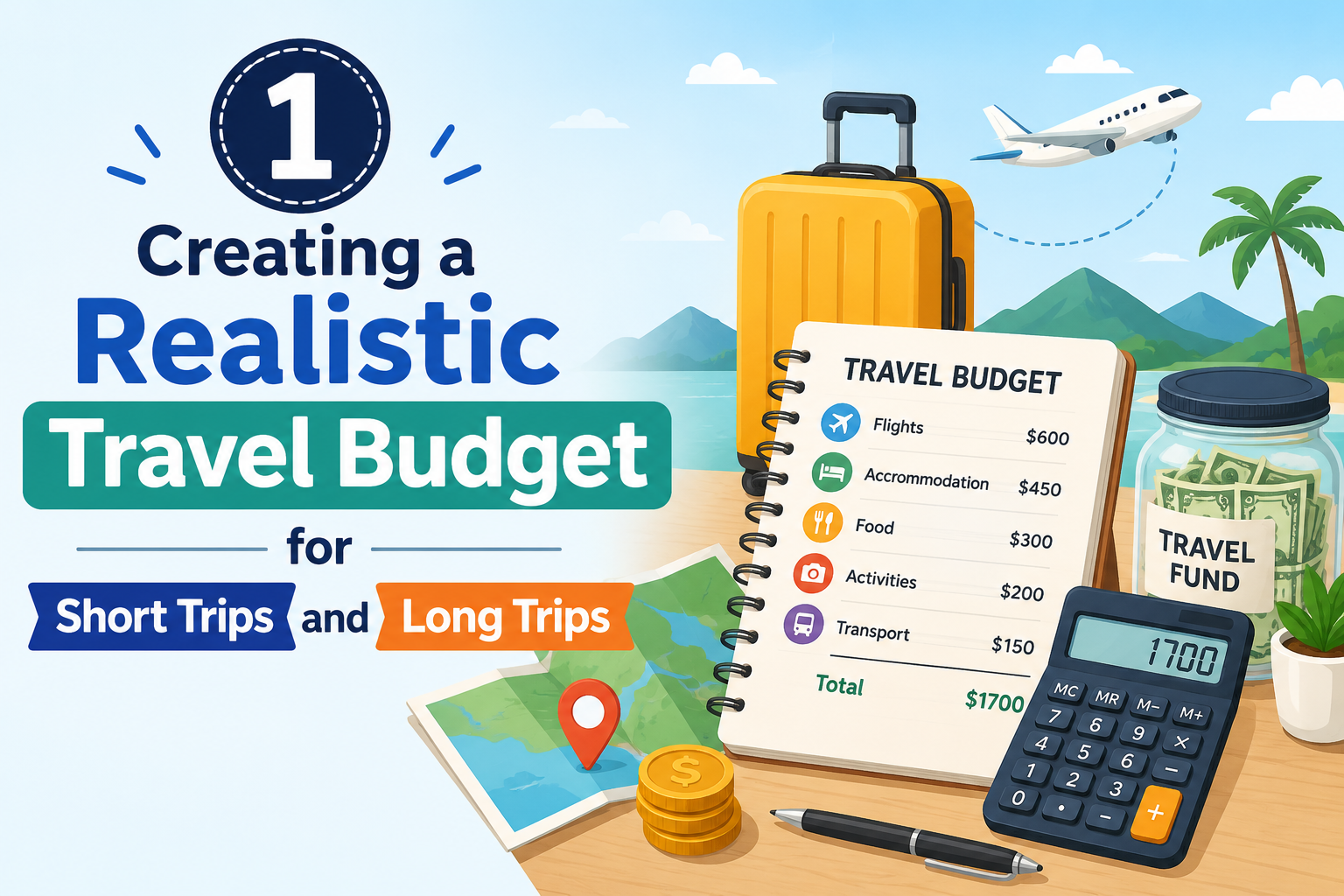
One of the biggest reasons travelers experience stress during a trip is poor budgeting. Many people either underestimate their expenses or create unrealistic spending plans that are difficult to follow once the journey begins. A well-planned travel budget is not designed to restrict enjoyment—it is designed to provide confidence, financial control, and peace of mind. Whether planning a weekend getaway, a week-long vacation, or a multi-month adventure, creating a realistic travel budget helps travelers make better decisions and avoid unpleasant financial surprises.
Successful travel budgeting is not about spending as little as possible. Instead, it is about understanding where money will go, preparing for expected and unexpected costs, and ensuring that travel remains enjoyable without creating financial strain afterward. A realistic budget allows travelers to focus on experiences rather than constantly worrying about expenses.
💰 A Travel Budget Is a Travel Tool
The purpose of budgeting is not to limit adventure. The purpose is to maximize value, reduce stress, and ensure that every travel dollar contributes meaningfully to the overall experience.
Start With the Type of Trip
Budgeting requirements vary depending on the length and nature of a journey. A short weekend trip has different financial considerations than a two-week vacation or a long-term travel experience.
Understanding the purpose and duration of the trip provides the foundation for realistic planning.
| Trip Type | Budget Focus |
|---|---|
| Weekend Getaway | Transportation and activities |
| One-Week Vacation | Accommodation and daily spending |
| Long-Term Travel | Sustainability and consistency |
Every budget should be tailored to the specific characteristics of the trip rather than relying on generic estimates.
Calculate Transportation Costs First
Transportation is often one of the largest travel expenses and should be calculated before other categories. This includes flights, trains, buses, rental vehicles, fuel, airport transfers, and local transportation.
Many travelers underestimate transportation costs by focusing only on major tickets while overlooking smaller expenses that accumulate throughout the trip.
✓ Transportation Budget Checklist
- Flights or long-distance transport.
- Airport transfers.
- Local transportation.
- Fuel expenses.
- Parking fees.
- Tolls and transit passes.
Estimate Accommodation Realistically
Accommodation costs vary significantly based on destination, season, travel style, and personal preferences. Rather than choosing the cheapest available option, focus on finding a realistic balance between comfort, convenience, and affordability.
Accommodation should fit the overall purpose of the trip while remaining financially sustainable.
For longer journeys, accommodation choices often have the greatest impact on the total budget.
- Location quality.
- Transportation access.
- Included amenities.
- Safety and comfort.
- Seasonal pricing variations.
Plan Food Expenses Honestly
Food budgets often become unrealistic because travelers either underestimate costs or fail to consider their actual dining habits.
A realistic budget should reflect personal preferences and the destination’s average food prices rather than relying on overly optimistic assumptions.
Some travelers enjoy local restaurants daily, while others balance restaurant meals with grocery purchases and self-prepared meals.
| Dining Style | Budget Impact |
|---|---|
| Frequent Restaurants | Higher daily spending |
| Mixed Approach | Balanced costs |
| Self-Catering | Lower overall expenses |
Account for Activities and Entertainment
Attractions, tours, museums, outdoor activities, events, and entertainment expenses can vary significantly depending on the destination and travel style.
Including these costs early prevents overspending later and ensures that important experiences remain affordable.
Travelers should prioritize activities that align most closely with their interests and goals.
🎟 Activity Budget Examples
- Museums and galleries.
- Guided tours.
- Adventure activities.
- National park fees.
- Local events.
- Entertainment venues.
Create an Emergency Reserve
Unexpected expenses are a normal part of travel. Flight changes, medical needs, weather disruptions, lost items, and transportation issues can occur even during well-planned trips.
An emergency reserve provides financial flexibility and reduces stress when unexpected situations arise.
Many experienced travelers consider emergency funds an essential part of every travel budget.
Track Daily Spending During the Trip
A travel budget is most effective when monitored throughout the journey. Tracking daily expenses helps travelers identify spending trends before they become problems.
This approach allows for small adjustments rather than major corrections later.
Awareness often leads to better financial decisions without reducing enjoyment.
- Better spending awareness.
- Improved budget accuracy.
- Reduced financial surprises.
- Greater flexibility.
- Stronger financial control.
Short Trips vs Long Trips
Short trips and long journeys require different budgeting strategies. Short vacations often prioritize convenience because travelers have limited time. Long-term travel typically emphasizes sustainability because expenses accumulate over weeks or months.
Understanding this distinction helps travelers allocate resources more effectively.
| Budget Priority | Short Trips | Long Trips |
|---|---|---|
| Convenience | High Priority | Moderate Priority |
| Cost Efficiency | Moderate Priority | High Priority |
| Flexibility | Moderate | Very Important |
Avoid Common Budgeting Mistakes
Many travel budgets fail because they are built on unrealistic assumptions rather than actual spending patterns.
Recognizing common mistakes can improve financial planning and reduce unnecessary stress.
⚠ Common Budget Errors
- Ignoring small expenses.
- Underestimating food costs.
- Skipping emergency funds.
- Overloading activity schedules.
- Ignoring transportation fees.
- Not tracking spending.
Focus on Value Rather Than Cheapness
The most successful travel budgets focus on value instead of simply minimizing expenses. Spending slightly more for better location, comfort, or convenience may actually improve the overall travel experience while preventing other costs.
Budgeting should support travel goals rather than restrict them unnecessarily.
The objective is financial balance, not financial deprivation.
★ Realistic Travel Budget Formula
- Transportation expenses.
- Accommodation costs.
- Food and dining.
- Activities and attractions.
- Local transportation.
- Travel insurance.
- Emergency reserve.
- Miscellaneous spending.
- Daily expense tracking.
- Flexible contingency planning.
Final Thoughts
Creating a realistic travel budget is one of the most valuable steps any traveler can take before departure. A thoughtful budget provides structure without eliminating spontaneity and allows travelers to enjoy experiences with greater confidence and less financial stress.
By accounting for transportation, accommodation, food, activities, emergency expenses, and daily spending habits, travelers can build budgets that reflect reality rather than wishful thinking. This approach improves financial control while enhancing the overall travel experience.
Whether planning a short weekend escape or a long-term adventure, a realistic travel budget transforms travel from a financial uncertainty into a well-managed opportunity for exploration, learning, and unforgettable experiences.