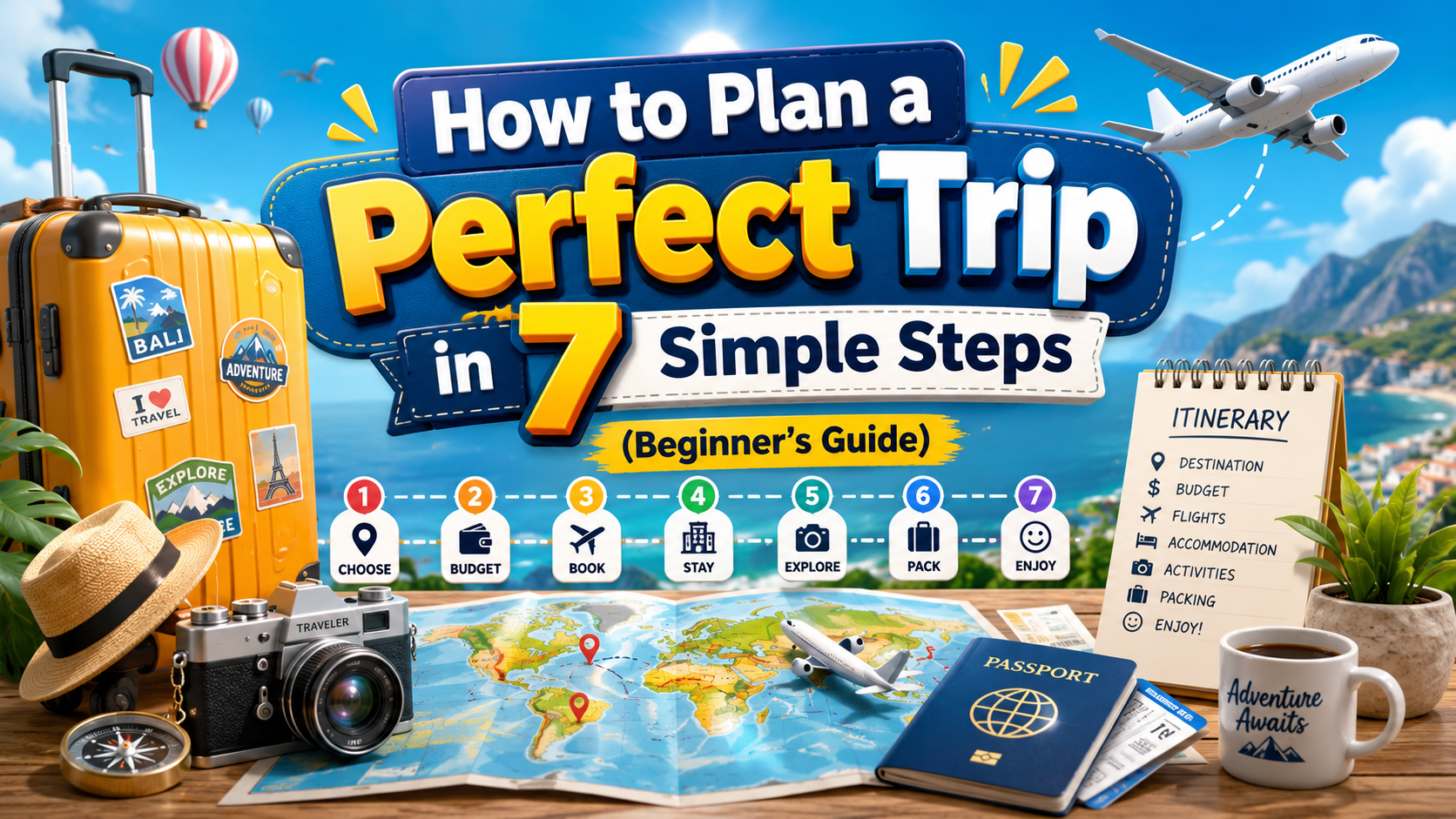
Planning your first trip can feel exciting and confusing at the same time. There are destinations to compare, flights to book, hotels to check, budgets to control and activities to organize. The good news is that you do not need to be an experienced traveler to create a smooth and enjoyable journey. A simple step-by-step plan can help you avoid unnecessary stress, overspending and last-minute problems.
Choose Wisely
Match the destination with your budget and interests.
Book Early
Compare prices before flights and hotels become expensive.
Stay Flexible
Leave room for rest and unexpected discoveries.
Travel Prepared
Keep documents, money and emergency details organized.
1Choose the Right Destination
The first step is deciding where you want to go. Instead of choosing a destination only because it looks attractive on social media, consider whether it matches your travel style, budget and available time.
Ask yourself these practical questions:
- Do I want a beach holiday, city break, mountain trip or cultural experience?
- How many days can I realistically travel?
- Is the destination suitable for the current season?
- Can I afford transportation, accommodation, food and activities?
- Do I need a visa, vaccination certificate or special permit?
Beginners often enjoy destinations with reliable transportation, easily available accommodation and popular attractions. Choosing a manageable location can make your first trip more comfortable and less stressful.
Helpful Tip: Make a shortlist of three destinations and compare their total estimated costs before making the final decision.
2Set a Realistic Travel Budget
A clear budget gives your trip structure. It helps you decide where to stay, how to travel and which experiences you can comfortably afford. Start with the total amount you are willing to spend and divide it into major categories.
| Expense Category | What to Include | Planning Advice |
|---|---|---|
| Transportation | Flights, trains, buses, taxis and fuel | Compare several travel dates |
| Accommodation | Hotels, hostels, apartments and taxes | Check location and guest reviews |
| Food | Meals, snacks, drinks and tips | Set a daily food allowance |
| Activities | Tours, museums, tickets and experiences | Book popular attractions early |
| Emergency Fund | Medical needs, delays or lost items | Keep 10–15% of the budget unused |
Do not spend every rupee or dollar before your trip begins. An emergency reserve can protect you from unexpected expenses such as transportation changes, medical needs or additional hotel nights.
3Decide Your Travel Dates
Travel dates can significantly affect the cost and overall experience. Peak seasons usually offer good weather and more events, but flights and hotels may be more expensive. Off-season travel can be affordable, although some attractions may operate on reduced schedules.
Check the destination’s climate, public holidays, festivals and expected crowds. Traveling in the shoulder season—the period between peak and off-season—often provides a good balance of pleasant weather, lower prices and fewer tourists.
Smart Planning: When your schedule is flexible, compare prices across several departure and return dates instead of selecting the first available option.
4Book Transportation and Accommodation
Once your destination, budget and travel dates are confirmed, book the main parts of your journey. Compare flights, trains or buses using trusted booking platforms, but also check the provider’s official website before paying.
Before booking transportation, review:
- Baggage limits and additional luggage charges
- Cancellation and date-change policies
- Airport, station or bus terminal location
- Arrival time and local transportation availability
- Total price after taxes and service charges
When choosing accommodation, do not focus only on the lowest price. A cheap hotel far from major attractions may increase transportation costs and waste valuable time. Read recent guest reviews, check neighborhood safety and confirm whether breakfast, Wi-Fi, parking or taxes are included.
5Create a Flexible Daily Itinerary
An itinerary helps you use your time efficiently, but every minute does not need to be scheduled. Choose one or two main attractions for each day and organize nearby places together. This reduces unnecessary travel across the city.
A balanced travel day may include:
- Morning: One major attraction or guided experience
- Afternoon: Lunch and a nearby museum, market or neighborhood
- Evening: A relaxed dinner, local walk or entertainment
Add free time for rest, shopping or spontaneous activities. Overplanning can make a holiday feel like a stressful work schedule. A flexible plan allows you to enjoy unexpected recommendations and local discoveries.
Beginner Mistake to Avoid: Do not place important activities immediately after your arrival. Flights and long journeys may be delayed, and you may need time to rest.
6Prepare Documents, Money and Safety Details
Good preparation can prevent small problems from becoming serious travel emergencies. Check the expiry date of your passport, identification documents and payment cards several weeks before departure.
- Passport, visa and identification documents
- Flight, train and accommodation confirmations
- Travel insurance information
- Emergency contacts and embassy details
- Digital and printed copies of important documents
- Some local currency and at least two payment methods
Store copies of important documents in a secure cloud account and keep printed copies separate from the originals. Tell a trusted family member about your itinerary and accommodation details.
Travel insurance is especially useful for international trips, expensive bookings or destinations where medical care may be costly. Read the policy carefully to understand medical coverage, cancellations, baggage protection and exclusions.
7Pack Smart and Complete Final Checks
Start packing a few days before departure rather than waiting until the final night. Check the weather forecast and select clothes that can be mixed and reused. Comfortable shoes, essential medicines and charging accessories are often more useful than extra outfits.
Final 24-hour checklist:
- Confirm departure time and terminal details
- Complete online check-in when available
- Charge your phone and power bank
- Download offline maps and booking confirmations
- Check baggage weight and prohibited items
- Arrange transportation to the airport or station
- Keep documents and medicines in your hand luggage
Avoid packing valuables that you do not truly need. Leave some space in your luggage for souvenirs, local products or items purchased during the journey.
Common Trip Planning Mistakes to Avoid
- Booking the cheapest option without checking its location or conditions
- Creating an itinerary with no rest time
- Ignoring visa rules, passport validity or entry requirements
- Carrying only one bank card or payment method
- Forgetting to calculate taxes, baggage fees and local transport costs
- Failing to keep copies of important travel documents
Careful planning does not mean eliminating every surprise. Its purpose is to reduce preventable problems so you can focus on enjoying the destination.
Frequently Asked Questions
How early should beginners plan a trip?
Domestic trips can often be planned one to three months in advance. International trips may require three to six months, especially when visas, expensive flights or popular destinations are involved.
What should I book first?
Confirm your travel dates and entry requirements first. After that, book transportation and accommodation before arranging smaller activities.
How much emergency money should I carry?
Keeping approximately 10–15% of your total travel budget for unexpected expenses is a practical starting point.
Is a detailed itinerary necessary?
A basic itinerary is helpful, but it should remain flexible. Plan major attractions and transportation while leaving room for rest and spontaneous experiences.
How can I save money without ruining the trip?
Travel during less crowded periods, compare dates, use public transportation, stay near important attractions and mix restaurant meals with affordable local food.
Final Thoughts
Planning a perfect trip is not about creating a complicated schedule or spending a large amount of money. It is about making thoughtful decisions before you leave. Choose a destination that suits you, create a realistic budget, book carefully, prepare essential documents and design a flexible itinerary.
Once the important details are organized, you can travel with greater confidence and enjoy the experience instead of worrying about preventable problems. Follow these seven simple steps, stay flexible and remember that the best trips usually combine good preparation with a little room for adventure.