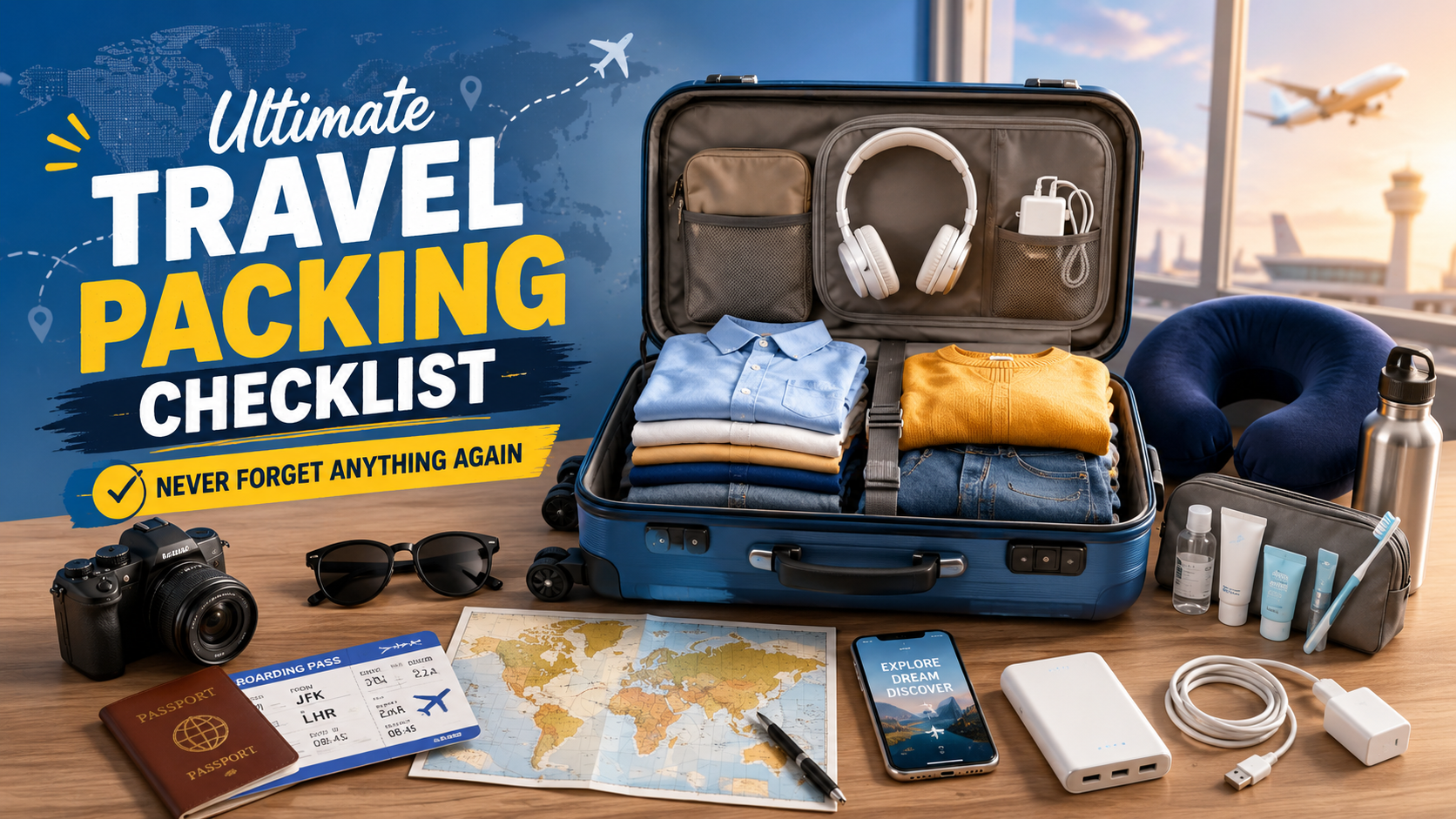
Pack Smarter, Travel Lighter and Stay Prepared
Packing can be one of the most stressful parts of travel. Many people either forget important items or carry far more than they actually need. A reliable packing system solves both problems. Instead of throwing random things into a suitcase, organize your belongings by category, destination, weather and trip duration. This checklist will help you prepare confidently for holidays, business trips, family vacations, road journeys and international adventures.
📄
Documents
Keep essential travel papers together.
👕
Clothing
Pack versatile outfits, not your whole wardrobe.
🔌
Technology
Carry chargers, adapters and backups.
🩹
Health
Prepare medicines and personal care items.
Start with a Simple Packing Strategy
Before opening your suitcase, check the destination’s weather, planned activities, accommodation facilities and baggage rules. A beach holiday requires different items from a winter city break. Similarly, a hotel may provide towels, toiletries and a hair dryer, while a hostel or campsite may not.
Make a written or digital checklist at least three days before departure. Place everything on a bed or clean floor before packing. This gives you a complete view and helps you remove unnecessary duplicates. Choose clothes that can be mixed, matched and worn more than once.
Golden Packing Rule: Pack everything you think you need, then remove at least 20 percent. Most travelers use fewer clothes and accessories than expected.
Essential Travel Documents
Documents should be checked before clothing because forgetting a passport or booking confirmation can disrupt the entire journey. Keep original documents in a secure travel wallet and store digital copies in a protected cloud account.
- Passport with sufficient validity
- Visa or entry authorization
- National identification card
- Flight, train or bus tickets
- Hotel booking confirmations
- Travel insurance details
- Driving licence and vehicle papers
- Emergency contact information
- Vaccination or health certificates
- Printed copies of key bookings
Never keep all documents, cards and cash in one place. Separate backups between your handbag, wallet and secure luggage compartment.
Clothing Checklist for Every Trip
The best travel clothes are comfortable, easy to combine and suitable for several situations. Neutral colors can create multiple outfits with fewer pieces. Check whether laundry facilities are available, especially for trips longer than one week.
| Item | Suggested Quantity | Useful Advice |
|---|---|---|
| Tops or shirts | One for every two days | Choose breathable, quick-drying fabrics |
| Trousers or bottoms | Two to four pairs | Select colors that match several tops |
| Underwear and socks | One set per day | Add two spare sets for emergencies |
| Sleepwear | One or two sets | Choose lightweight options |
| Jacket or outer layer | One suitable layer | Wear the heaviest layer while traveling |
| Footwear | Two or three pairs | Include comfortable walking shoes |
- Comfortable daily outfits
- Formal or smart-casual outfit
- Swimwear when required
- Rain jacket or compact umbrella
- Hat, cap or winter beanie
- Belt and simple accessories
Toiletries and Personal Care Essentials
Toiletries can quickly make luggage heavy. Use travel-size containers and follow airline liquid restrictions when carrying cabin baggage. Place liquids inside a sealed transparent pouch to prevent leaks.
- Toothbrush and toothpaste
- Soap or body wash
- Shampoo and conditioner
- Deodorant
- Comb or hairbrush
- Sunscreen and moisturizer
- Razor and grooming products
- Makeup and makeup remover
- Sanitary products
- Contact lenses and solution
- Hand sanitizer and tissues
- Small quick-dry towel
Check what your accommodation provides before packing full-size soap, towels, slippers or hair-care equipment.
Electronics and Travel Technology
Phones now hold boarding passes, maps, payment apps and hotel details, making charging accessories extremely important. Download important information before leaving home in case internet access is unreliable.
- Mobile phone and charging cable
- Power bank
- Universal travel adapter
- Laptop or tablet when needed
- Earphones or headphones
- Camera, batteries and memory cards
- Smartwatch charger
- Portable Wi-Fi device or local SIM
- Protective phone case
- Charging cable organizer
Keep valuable electronics, batteries and essential chargers in your cabin bag rather than checked luggage.
Health, Medicine and Safety Items
Carry enough prescription medicine for the full trip, plus a small extra supply for delays. Keep medicines in original packaging when traveling internationally and bring a doctor’s note for controlled medication when required.
Basic Medicine
Pain relief, allergy tablets, motion-sickness medicine and digestive support.
First Aid
Adhesive bandages, antiseptic wipes, gauze and blister protection.
Personal Safety
Small flashlight, luggage lock, whistle and emergency details.
- Prescription medication
- Basic first-aid kit
- Insect repellent
- Face masks when necessary
- Reusable water bottle
- Travel sickness tablets
What to Keep in Your Carry-On Bag
Your carry-on should contain everything needed during the journey and for the first day at your destination. Checked luggage can occasionally be delayed, so a small backup kit can prevent major inconvenience.
- Passport and travel documents
- Wallet, cards and some cash
- Phone, charger and power bank
- Prescription medicine
- One clean outfit
- Basic toiletries
- Snacks and an empty water bottle
- Neck pillow and eye mask
- Pen for travel forms
- Valuable personal items
Useful Extras Based on Trip Type
| Trip Type | Extra Items to Consider |
|---|---|
| Beach holiday | Swimwear, beach towel, sunglasses, sandals and waterproof phone pouch |
| Cold destination | Thermal layers, gloves, scarf, warm socks and waterproof boots |
| Business trip | Formal clothes, laptop, presentation backups and business cards |
| Road trip | Vehicle documents, snacks, offline maps, emergency tools and car charger |
| Outdoor adventure | Hiking shoes, reusable bottle, sun protection, first aid and weatherproof gear |
Frequently Asked Questions
How early should I start packing?
Begin preparing your checklist about one week before departure and start physically packing two or three days before the trip.
Are packing cubes worth using?
Yes. Packing cubes organize clothing, separate clean and dirty items and make it easier to find belongings without unpacking everything.
Should I roll or fold clothes?
Rolling works well for casual clothes and saves space. Folding is often better for structured shirts, jackets and items that wrinkle easily.
How can I avoid overweight baggage?
Check the airline limit, use a luggage scale, wear heavy clothing during travel and avoid packing large bottles or unnecessary footwear.
What is the most commonly forgotten travel item?
Chargers, toothbrushes, medicines, adapters and printed booking details are among the items travelers forget most frequently.
Final Packing Check
Before closing your suitcase, review your documents, medication, phone charger, payment methods and accommodation details. Weigh your luggage, check the weather one final time and confirm transportation arrangements.
Good packing is not about carrying everything you own. It is about bringing the right items, organizing them properly and preparing for realistic situations. With this checklist, you can leave home confidently, avoid last-minute stress and spend more time enjoying your journey.