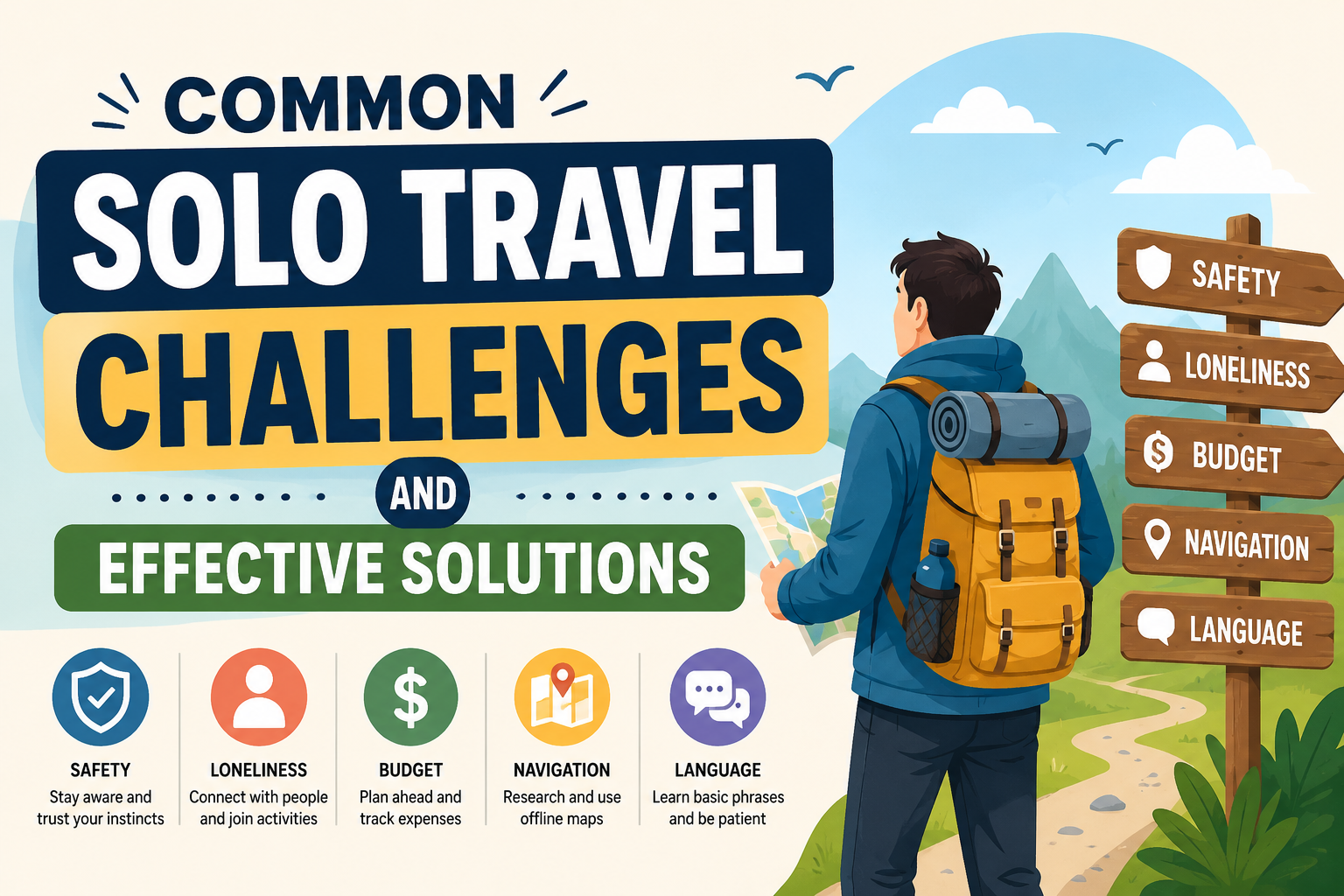
Solo travel is often described as one of the most rewarding ways to explore the world. It offers freedom, flexibility, independence, and opportunities for personal growth. However, traveling alone is not always effortless. Even experienced solo travelers occasionally face challenges that can test their patience, confidence, and adaptability. Understanding these common challenges before departure allows travelers to prepare effectively, respond calmly, and enjoy their journeys with greater confidence.
The good news is that most solo travel difficulties are manageable. In many cases, the same challenges that seem intimidating at first eventually become valuable learning experiences. By recognizing potential obstacles and preparing practical solutions, travelers can transform uncertainty into confidence and turn challenges into opportunities for growth.
◆ Every Solo Traveler Faces Challenges
Challenges are a normal part of travel, not a sign that something has gone wrong. Learning how to handle them effectively is one of the reasons solo travel contributes so strongly to personal development.
Challenge #1: Feeling Lonely During the Trip
Loneliness is one of the most common concerns among first-time solo travelers. While many people enjoy independence, spending extended periods without familiar friends or family can occasionally feel isolating.
The solution is not necessarily to avoid solitude but to create opportunities for meaningful interaction when desired.
- Join guided tours and local activities.
- Attend cultural events.
- Stay in social accommodations when appropriate.
- Participate in group experiences.
- Maintain contact with family and friends.
Many solo travelers discover that temporary moments of loneliness often lead to valuable self-reflection and personal growth.
Challenge #2: Navigating Unfamiliar Places
Getting lost, misunderstanding transportation systems, or struggling with directions can feel stressful when traveling alone.
Fortunately, preparation and technology make navigation much easier than it was in previous decades.
| Navigation Challenge | Practical Solution |
|---|---|
| Getting Lost | Use offline maps |
| Transit Confusion | Research routes beforehand |
| Language Barriers | Use translation tools |
Accepting that occasional confusion is part of travel often reduces stress significantly.
Challenge #3: Managing Safety Concerns
Personal safety is often the biggest concern for solo travelers. While most trips proceed without major problems, awareness and preparation remain important.
The goal is not to become fearful but to develop smart habits that reduce unnecessary risks.
🛡 Safety Solutions
- Research destinations carefully.
- Choose accommodations wisely.
- Share travel plans with trusted contacts.
- Stay aware of surroundings.
- Trust your instincts.
Prepared travelers often feel significantly more confident throughout their journeys.
Challenge #4: Decision Fatigue
When traveling alone, every decision becomes your responsibility. Choosing where to eat, what to do, how to travel, and where to stay may eventually feel exhausting.
Many solo travelers experience decision fatigue after several days of constant planning.
- Create flexible daily plans.
- Research key activities beforehand.
- Prioritize must-see attractions.
- Allow downtime between activities.
- Accept that you cannot do everything.
Challenge #5: Handling Unexpected Problems Alone
Missed transportation connections, weather disruptions, lost items, and reservation issues can feel more stressful when no travel companion is available to help.
However, solving these problems independently often becomes one of the greatest sources of personal growth.
Preparation and flexibility are the best tools for managing unexpected situations.
- Keep emergency contacts accessible.
- Carry backup payment methods.
- Save important documents digitally.
- Maintain travel insurance when appropriate.
- Allow extra time for important connections.
Challenge #6: Managing a Travel Budget
Without a travel partner to share expenses, solo travelers may sometimes face higher costs for accommodations, transportation, or activities.
Budget management becomes especially important during longer trips.
Fortunately, thoughtful planning often offsets many of these additional costs.
| Budget Challenge | Solution |
|---|---|
| Higher Accommodation Costs | Book early and compare options |
| Overspending | Track daily expenses |
| Unexpected Costs | Maintain emergency reserves |
Challenge #7: Eating Alone
Many first-time solo travelers feel uncomfortable dining alone. They worry about appearing awkward or attracting attention.
In reality, eating alone is common in many destinations, especially in major cities and tourist areas.
Most people are focused on their own experiences rather than paying attention to other diners.
🍽 Comfortable Solo Dining Tips
- Bring a book or journal.
- Choose welcoming restaurants.
- Eat during busy hours.
- Focus on enjoying the experience.
- Treat meals as personal time.
Challenge #8: Language Barriers
Travelers visiting destinations where they do not speak the local language may occasionally encounter communication difficulties.
While this can be frustrating, most situations can be managed through preparation, patience, and basic communication strategies.
Learning a few key local phrases often improves interactions significantly.
- Learn basic greetings.
- Use translation applications.
- Carry important addresses.
- Speak clearly and politely.
- Use visual communication when needed.
Challenge #9: Overplanning or Underplanning
Some solo travelers create overly detailed schedules that leave little room for flexibility. Others plan almost nothing and struggle with organization.
Finding the balance between structure and spontaneity often produces the best travel experience.
A flexible framework usually works better than a rigid schedule.
⚠ Planning Balance
- Research major attractions.
- Book essential reservations.
- Leave free time for exploration.
- Prepare backup options.
- Remain flexible when opportunities arise.
Challenge #10: Self-Doubt Before Departure
Many first-time solo travelers question whether they are capable of traveling alone successfully.
This self-doubt is completely normal. Nearly every experienced solo traveler felt uncertain before their first independent trip.
Confidence is rarely present before the journey begins—it develops through action and experience.
★ Solo Travel Challenge Solutions Summary
- Manage loneliness through social opportunities.
- Use navigation tools and preparation.
- Follow consistent safety practices.
- Reduce decision fatigue through planning.
- Prepare for unexpected situations.
- Track spending carefully.
- Become comfortable dining alone.
- Learn basic local communication skills.
- Balance planning with flexibility.
- Build confidence through experience.
Final Thoughts
Every solo traveler encounters challenges at some point, regardless of experience level. Loneliness, navigation difficulties, budgeting concerns, language barriers, and unexpected disruptions are all normal parts of the travel experience. These situations should not be viewed as failures but as opportunities to learn and grow.
The most successful solo travelers are not those who avoid challenges entirely. They are the travelers who prepare thoughtfully, remain flexible, and respond calmly when difficulties arise. Each challenge overcome becomes evidence of greater confidence, resilience, and independence.
Solo travel is not about having a perfect journey. It is about discovering that you are capable of handling far more than you may have imagined. With preparation, awareness, and a positive mindset, the challenges of solo travel often become the experiences that make the journey most rewarding.