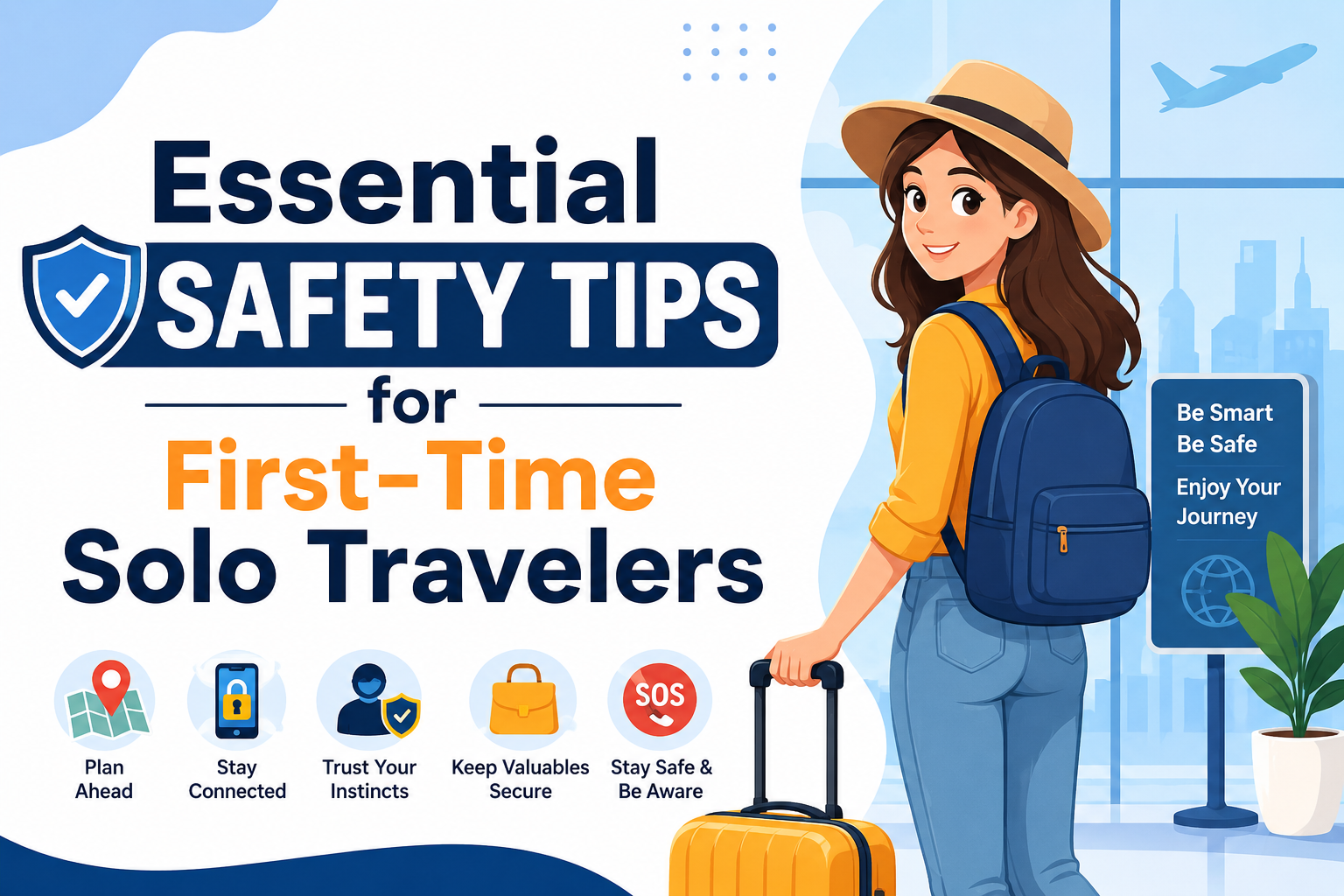
Traveling alone for the first time can be exciting, empowering, and life-changing. It offers freedom, flexibility, and opportunities to explore the world at your own pace. However, solo travel also comes with additional responsibilities. Without travel companions to assist during unexpected situations, personal safety becomes even more important. The good news is that most travel risks can be reduced significantly through preparation, awareness, and smart decision-making. By developing good safety habits before and during your trip, you can travel confidently while focusing on creating memorable experiences.
Safety should not prevent people from traveling alone. Instead, it should become part of the planning process. Experienced solo travelers are not fearless—they are prepared. They understand potential risks, stay aware of their surroundings, and make thoughtful choices that help them enjoy their journeys with confidence.
🛡 Confidence Comes From Preparation
The safest solo travelers are usually not the most experienced travelers. They are the travelers who prepare carefully, stay aware, and consistently follow good travel habits.
Research Your Destination Thoroughly
Before arriving, spend time learning about your destination. Understanding local customs, transportation systems, cultural expectations, weather conditions, and common tourist scams can help prevent many problems.
Researching neighborhoods, transportation options, and emergency services provides valuable information that can be useful throughout the trip.
- Local laws and customs.
- Transportation systems.
- Safe neighborhoods.
- Emergency contact numbers.
- Weather conditions.
- Common travel scams.
Share Your Travel Plans With Someone You Trust
One of the simplest safety practices is keeping someone informed about your itinerary. Family members or trusted friends should know your accommodation details, major travel plans, and expected arrival times.
Regular check-ins provide additional reassurance and ensure someone is aware if plans change unexpectedly.
| Information to Share | Why It Matters |
|---|---|
| Accommodation Details | Location awareness |
| Transportation Plans | Travel tracking |
| Emergency Contacts | Rapid communication |
Choose Accommodation Carefully
Accommodation selection plays a major role in travel safety. Prioritize reputable properties with positive reviews, secure access systems, and convenient locations.
Reading recent guest reviews often provides valuable insights into safety, cleanliness, and neighborhood conditions.
A slightly higher accommodation cost may be worthwhile if it significantly improves safety and convenience.
✓ Accommodation Safety Checklist
- Read recent reviews.
- Research neighborhood safety.
- Confirm secure building access.
- Check transportation availability.
- Verify contact information.
- Review emergency procedures.
Stay Aware of Your Surroundings
Situational awareness is one of the most effective travel safety tools. Pay attention to people, environments, transportation stations, and local activity around you.
Avoid becoming completely distracted by mobile devices while walking through unfamiliar areas.
Awareness allows travelers to identify potential concerns early and make better decisions.
- Observe surroundings regularly.
- Keep valuables secure.
- Avoid unnecessary distractions.
- Know where exits are located.
- Trust your instincts.
Protect Important Documents
Passports, identification cards, travel insurance information, and transportation documents are among the most important items travelers carry.
Keep physical copies secure and maintain digital backups whenever possible.
Having duplicate records can significantly simplify recovery if documents are lost or stolen.
📄 Essential Documents
- Passport.
- Identification cards.
- Travel insurance information.
- Emergency contacts.
- Accommodation confirmations.
- Transportation reservations.
Be Careful With Personal Information
Meeting new people is one of the joys of travel, but sharing excessive personal information with strangers can create unnecessary risks.
Avoid revealing detailed accommodation information, financial details, or travel schedules to people you have only recently met.
Friendly conversations can remain enjoyable without sharing sensitive information.
Stay Connected When Possible
Reliable communication can provide reassurance during solo travel. Ensure you have access to mobile communication, internet connectivity, or alternative methods for contacting others when necessary.
Offline maps, saved contact information, and emergency numbers can also be valuable if internet access becomes unavailable.
Preparation improves confidence and flexibility during unexpected situations.
📱 Communication Essentials
- Emergency contact numbers.
- Offline maps.
- Accommodation contact information.
- Transportation details.
- Backup charging options.
Trust Your Instincts
One of the most valuable safety tools requires no equipment or technology. If a situation, location, or interaction feels uncomfortable, trust your instincts.
Leaving an uncomfortable environment, changing plans, or seeking assistance is often the safest decision.
Personal intuition frequently notices warning signs before logical analysis fully processes them.
Avoid Taking Unnecessary Risks
Adventure and exploration are important parts of travel, but unnecessary risks rarely improve the experience.
Poorly lit areas, unsafe transportation options, excessive alcohol consumption, and isolated locations can increase vulnerability.
Making cautious decisions often prevents problems before they develop.
⚠ Situations That Require Extra Caution
- Late-night transportation.
- Unfamiliar neighborhoods.
- Overly crowded locations.
- Unverified accommodation offers.
- Unexpected invitations from strangers.
- Unsafe weather conditions.
Prepare for Emergencies Before They Happen
Emergency planning is not pessimistic—it is practical. Knowing how to contact emergency services, reach your accommodation, access medical assistance, or replace important documents can save valuable time during stressful situations.
Most emergencies never occur, but preparation provides confidence and peace of mind.
Being prepared often reduces anxiety throughout the trip.
| Emergency Preparation | Benefit |
|---|---|
| Emergency Contacts | Faster assistance |
| Document Backups | Simplified recovery |
| Medical Information | Better emergency response |
★ Solo Travel Safety Essentials
- Research destinations thoroughly.
- Share travel plans with trusted contacts.
- Choose accommodations carefully.
- Stay aware of your surroundings.
- Protect important documents.
- Maintain reliable communication.
- Trust your instincts.
- Avoid unnecessary risks.
- Prepare for emergencies.
- Stay flexible and informed.
Final Thoughts
Solo travel can be one of the most rewarding experiences a person undertakes. It offers freedom, independence, confidence, and opportunities for growth that few other experiences can match. While traveling alone does require additional responsibility, safety concerns should not prevent people from exploring the world.
By preparing carefully, staying aware, making thoughtful decisions, and following practical safety habits, first-time solo travelers can significantly reduce risks while increasing confidence. Most travel challenges can be managed successfully when approached with preparation and common sense.
The goal of solo travel safety is not to create fear—it is to create confidence. When you know you are prepared, you can focus less on worrying and more on enjoying the incredible experiences, cultures, and opportunities that solo travel has to offer.